IOW-Kiel, session 11
How to ‘downsize’ a complex society
Experiments with agent-based models to assess the resilience of Indus Civilisation settlements to past climate change
Andreas Angourakis,
Jennifer Bates,
Jean-Phillipe Baudouin,
Alena Giesche,
M. Cemre Ustunkaya,
Nathan Wright,
Ravindra N. Singh and
Cameron A. Petrie
https://andros-spica.github.io/IOW-Angourakis-et-al-2019/index.html?print-pdf (printable version)

Overview
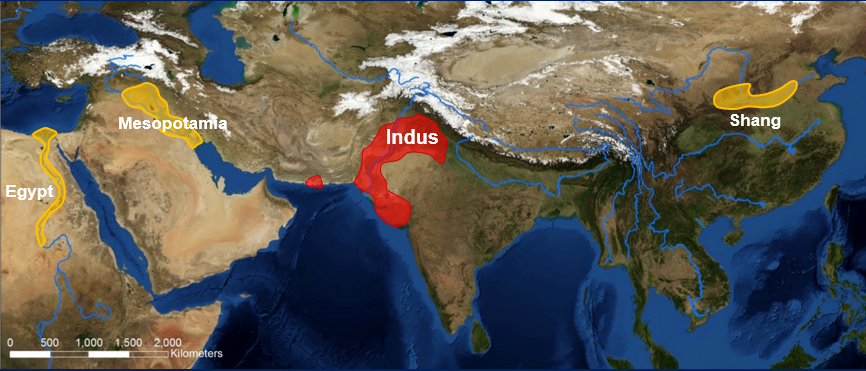
- One of the great ‘Old World’ Bronze Age civilisations
- First cities in South Asia (c.2500-1900 BC) [“experiment”?]
- De-urbanisation - collapse, decline or transformation?
- Five (or four) known major urban centres
- Possibly ‘city-states’
- each up to 280 km apart
- primarily rely on zebu, sheep, goat and water buffalo + wheat/barley + (some) summer crops
Indus Civilisation
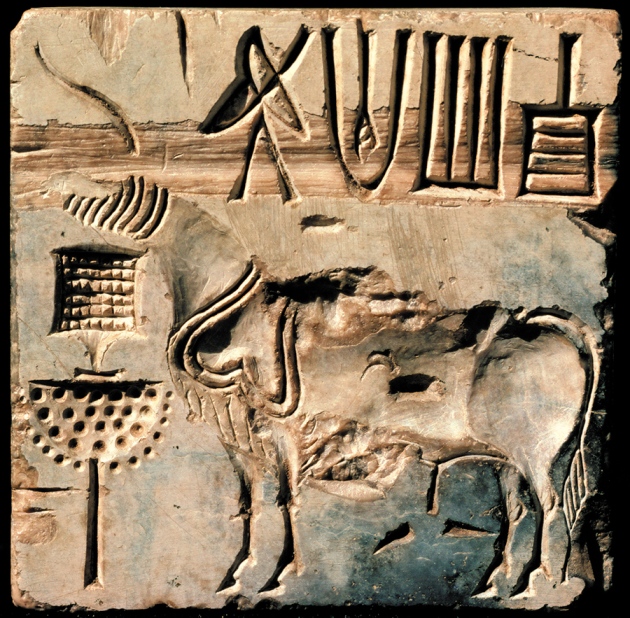
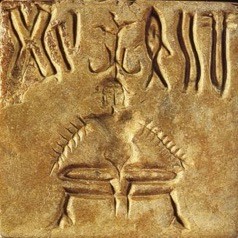


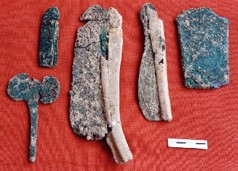
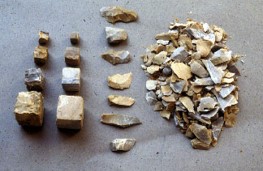

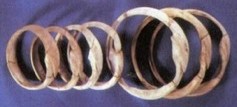
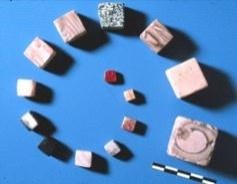
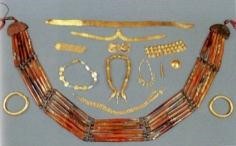
Long distance exchange/trade
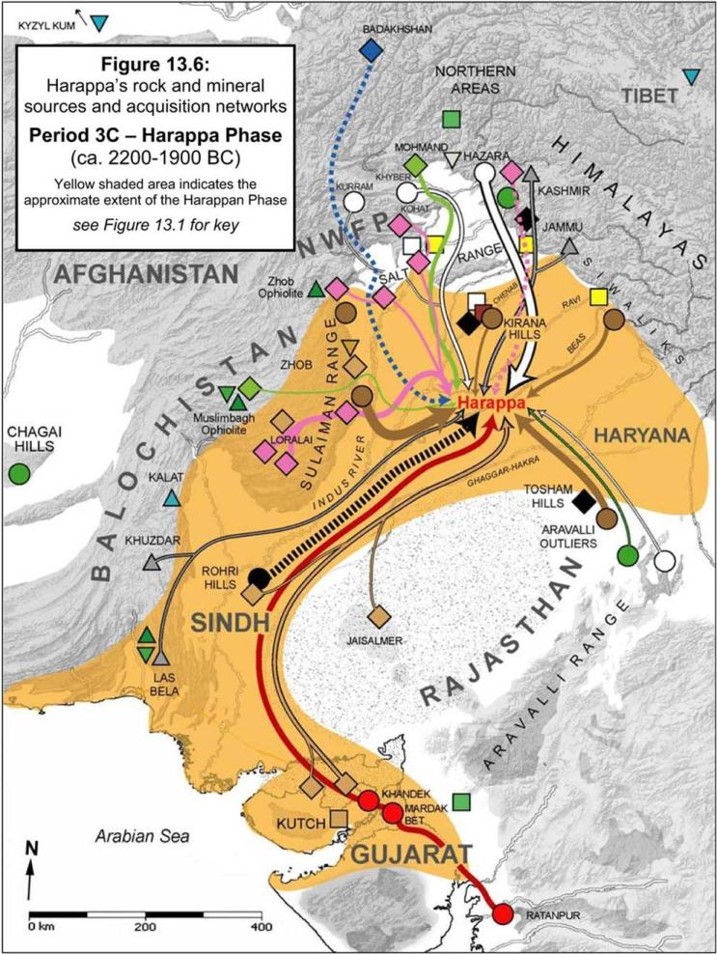
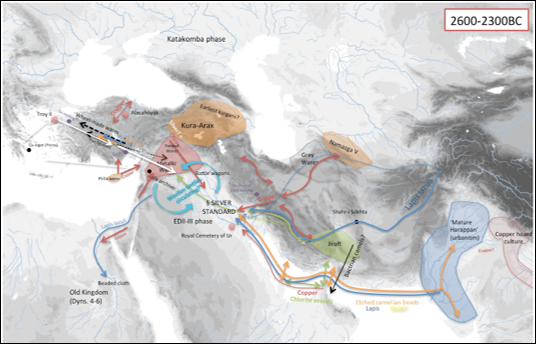
R. Law 2010, T. Wilkinson 2012
summer rain, winter rain
 “Predictable unpredictability”
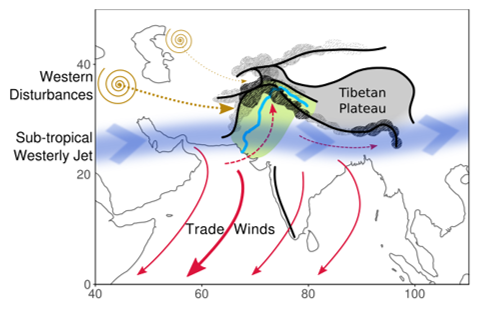
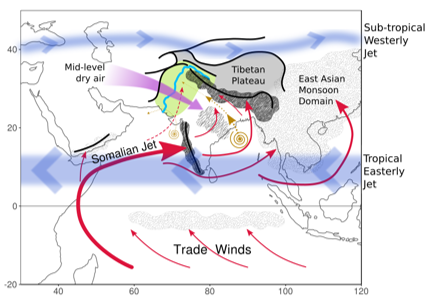
climate change
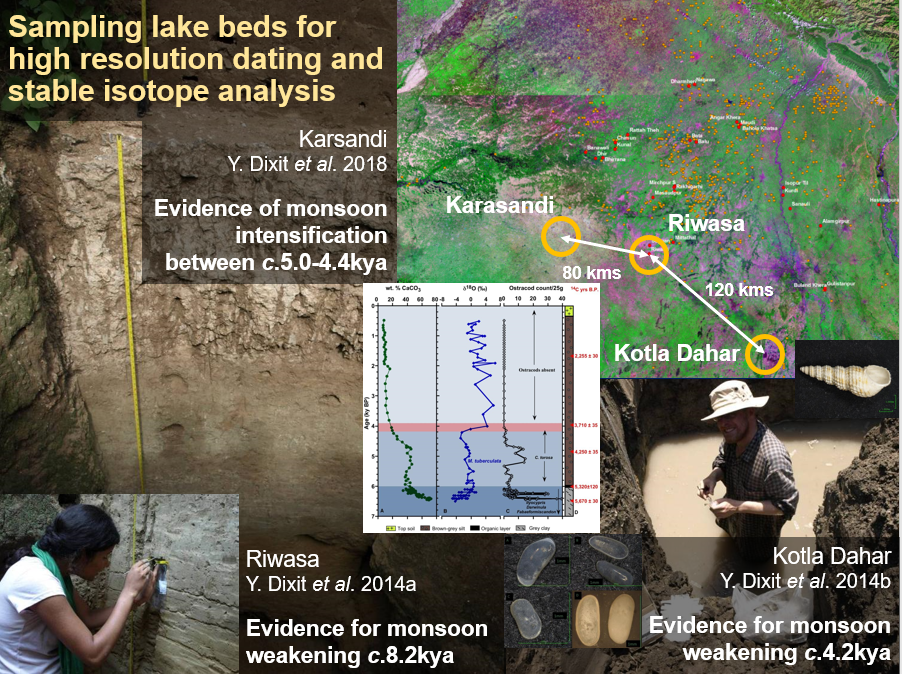

 Giesche et al. 2019
- start of the urban phase -> stronger winter monsoon (4.5 and 4.3 ka)
- end of the urban phase -> some time after the decrease in both the summer and winter monsoon strength (4.1 ka)
Crop diversity
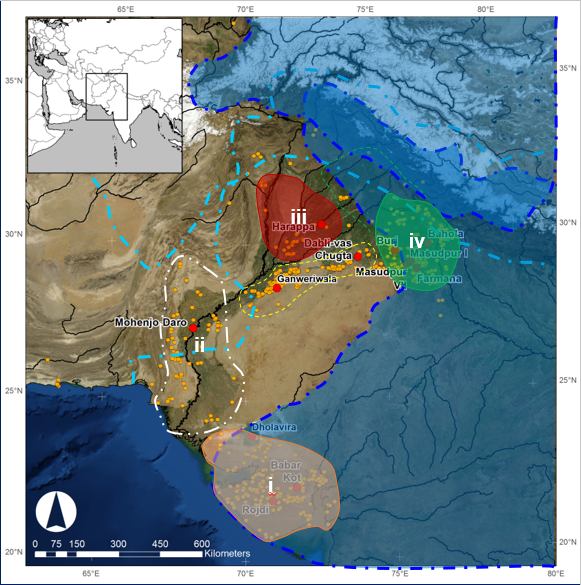
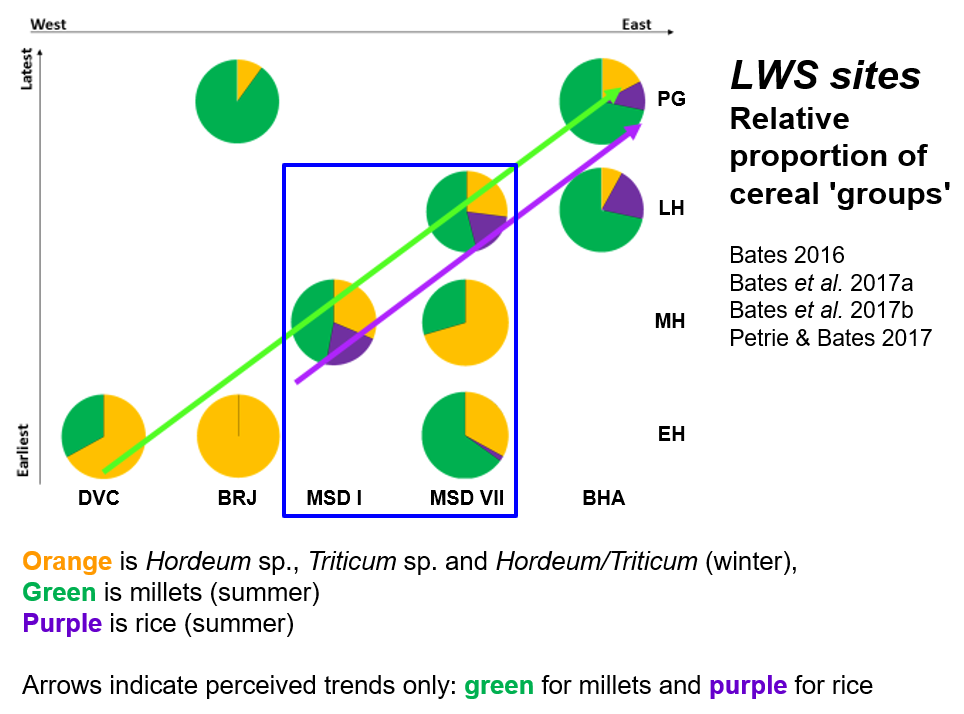

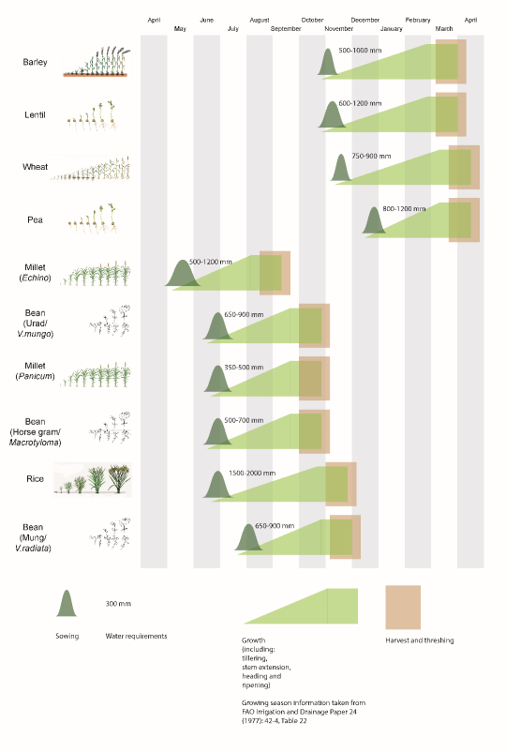

Farming in two seasons involves diverse land-use, water requirements, and careful scheduling of labour
multi-cropping and intercropping
constraints and potentialities of combining crops
Rakhigarhi hinterlands
Lohari Ragho
Occupied in Early and Mature phases (pre-4.2 kya BP)
Ideal for exploring the transition to the urban period and behaviour before the climate event.
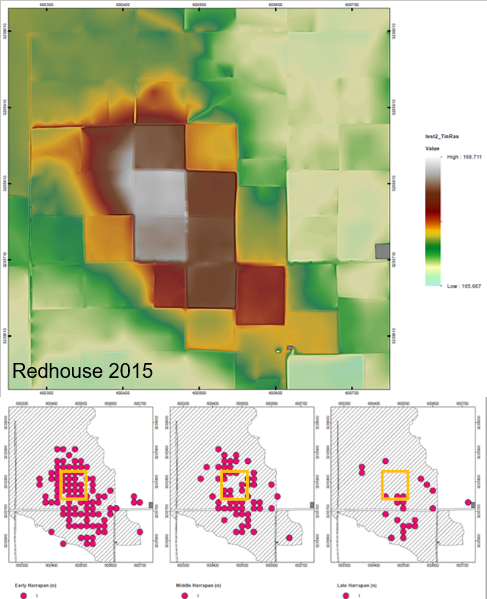
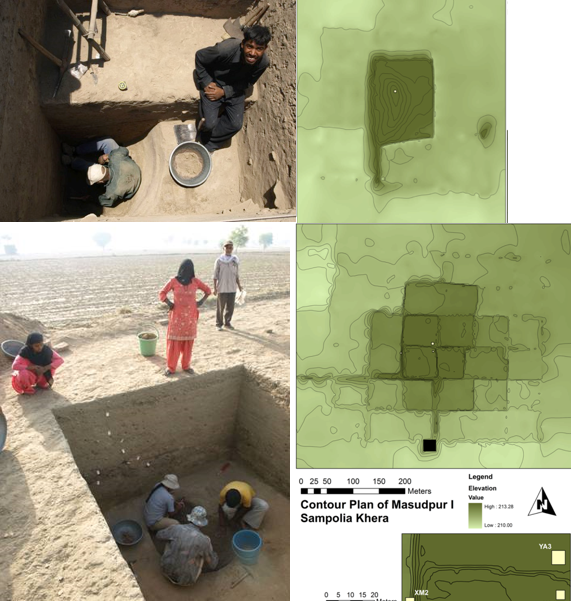
Masudpur-I
Occupied in Mature and Late phases (post-4.2 kya BP)
Ideal for exploring behaviour after the climate event and the transition into the post-urban period.
others
MSD VII - Bhimwada Jodha,
1-2 ha mound, height 1-2 m
MSD 1 - Sampolia Khera,
5-6 ha mound, height 1-2 m
- 6km apart, c.15 km from Rakhigarhi
- Intermittent occupation at both sites, spanning consecutive phases
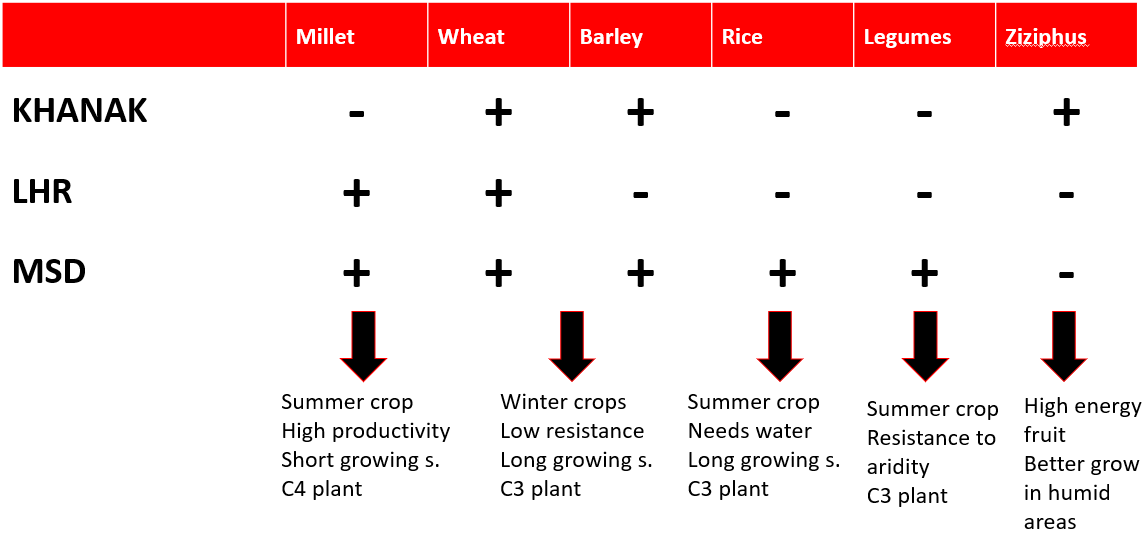
- barley, also millet + rice in the Early, Mature & Late Harappan
Bates et al 2017a/b, Petrie et al 2016
Flotation materials
Flotation materials
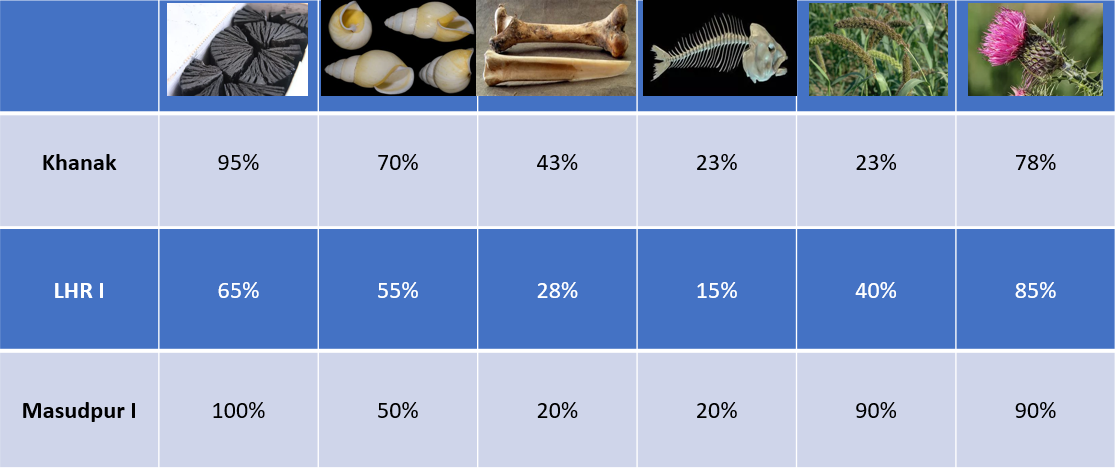
Economical plants (M. Cemre Ustunkaya)
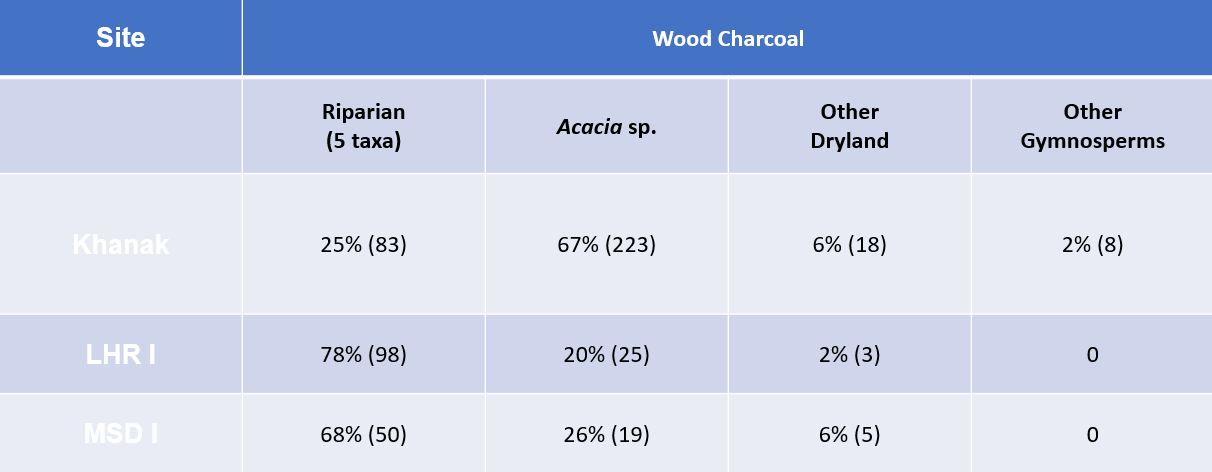
Charcoal (N. Wright)
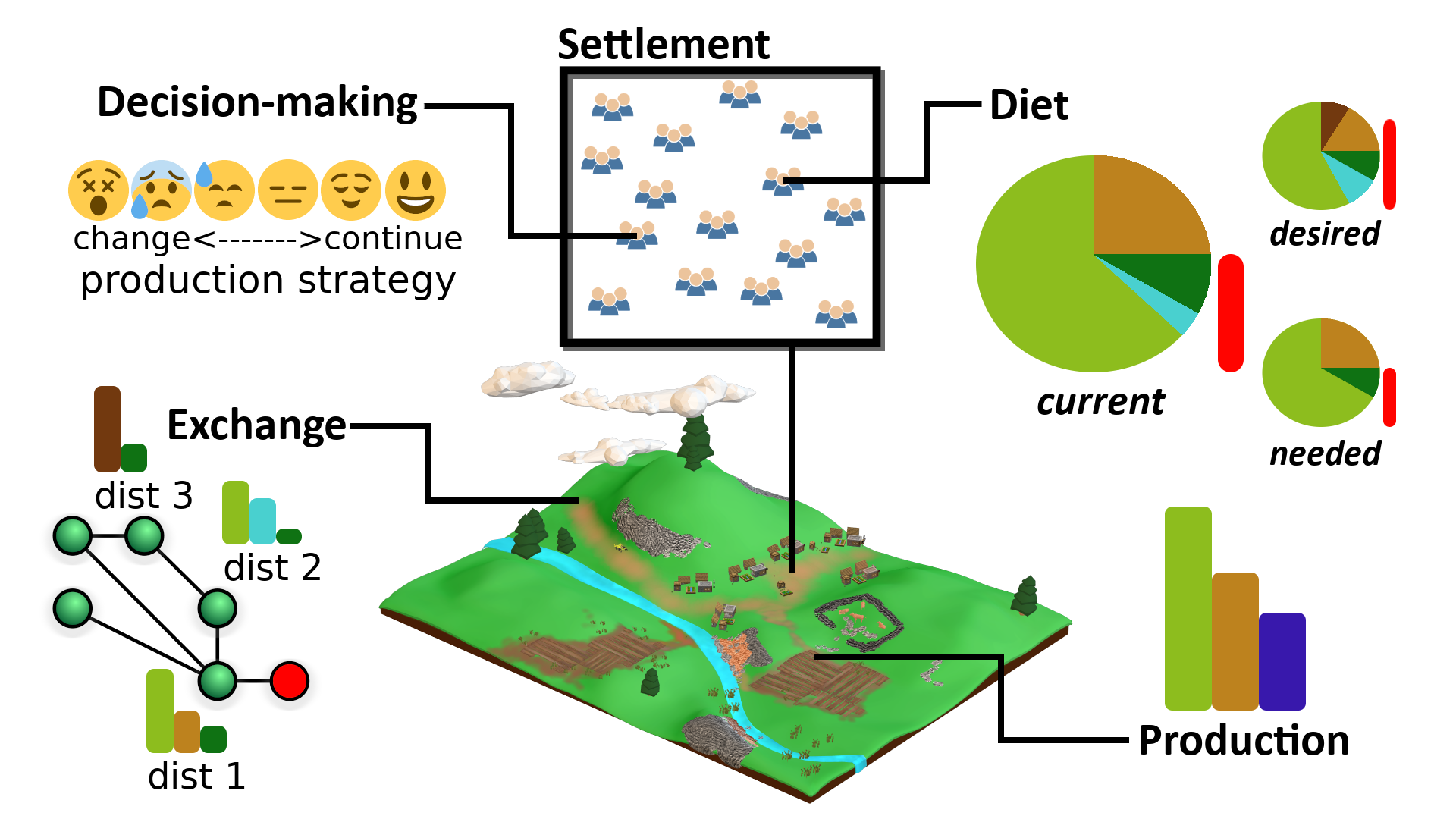
TwoRains modelling programme
to explore human adaptation to the shifting landscapes of NW India and expose the sustainability of different types of possible human responses, in terms of decision-making, to abrupt climate change
- rural settlement
- households
- food production/consumption
- land use (crop strategies)
- surplus?
Households
- Definition: propinquity and co-residence, rather than kinship
- Importance: most universal element of human societies
- Models (templates):
- Household demography
- Household economy
Household demography
Structure
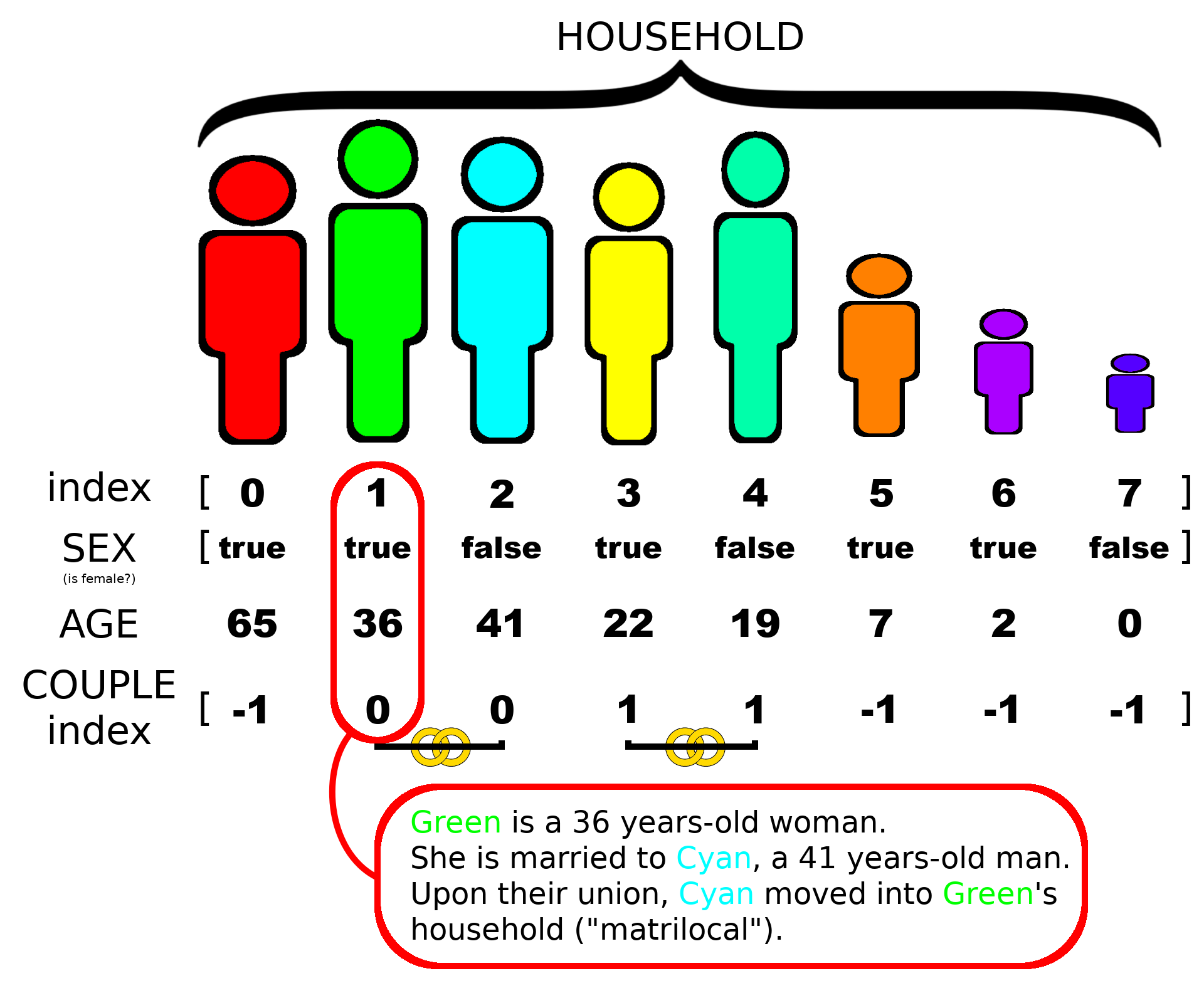
models
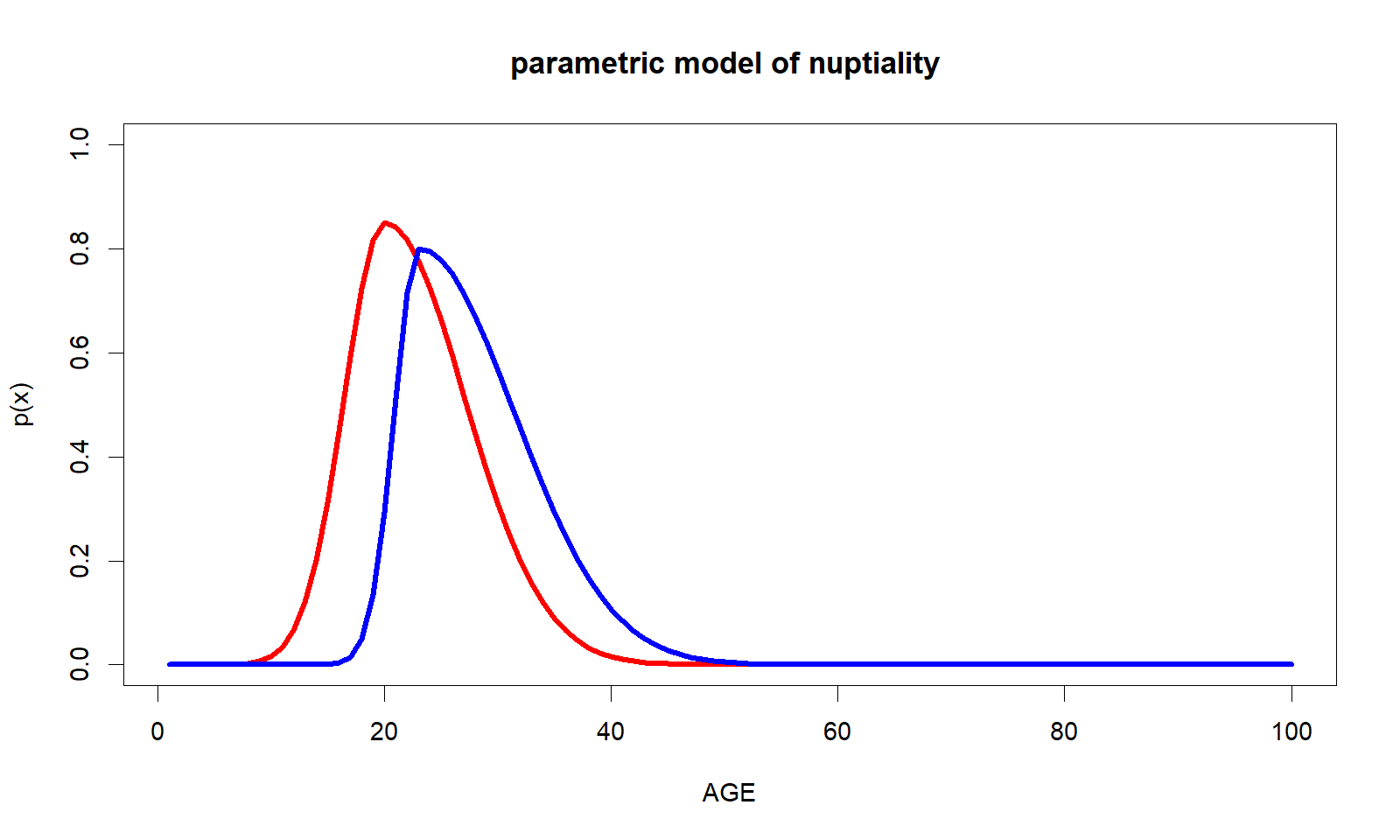
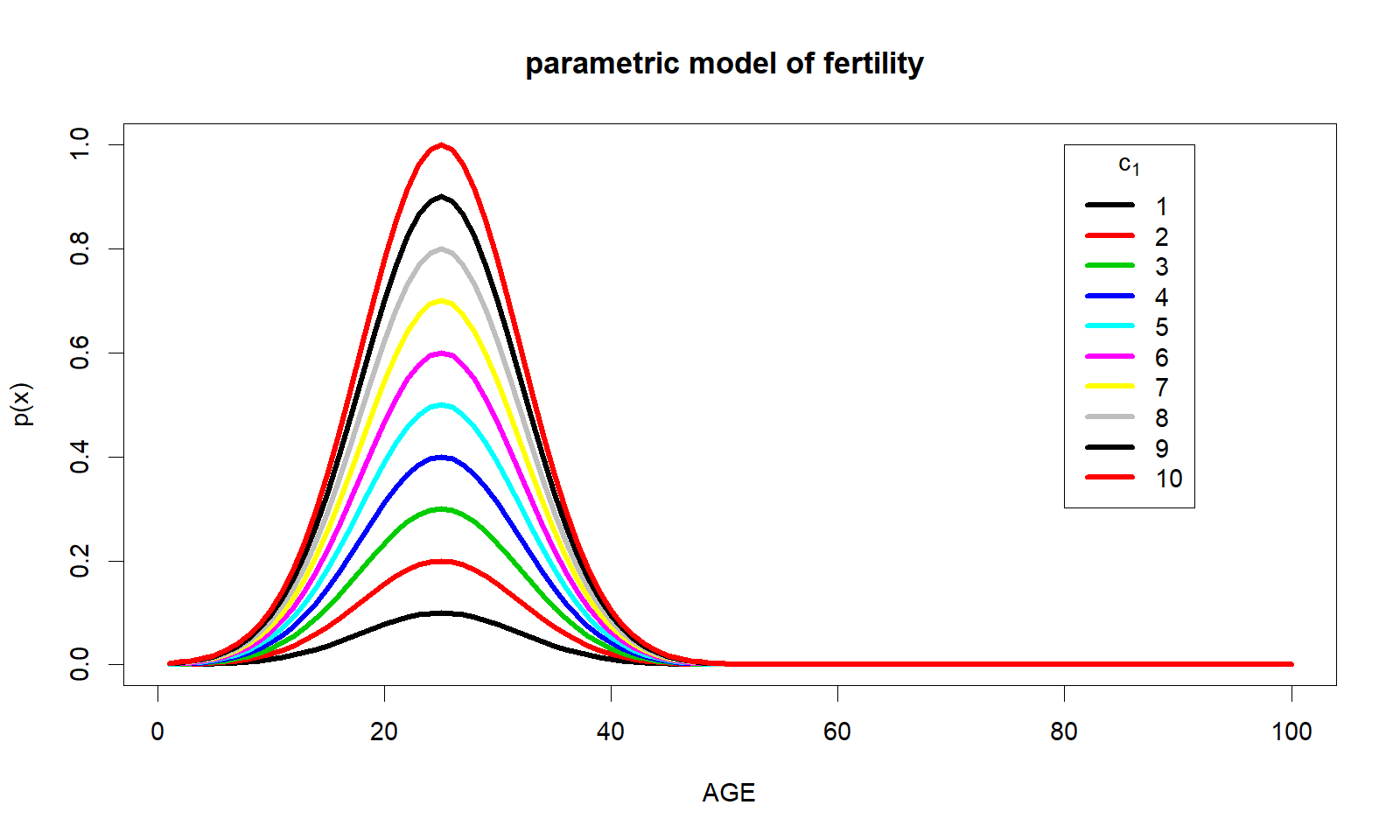
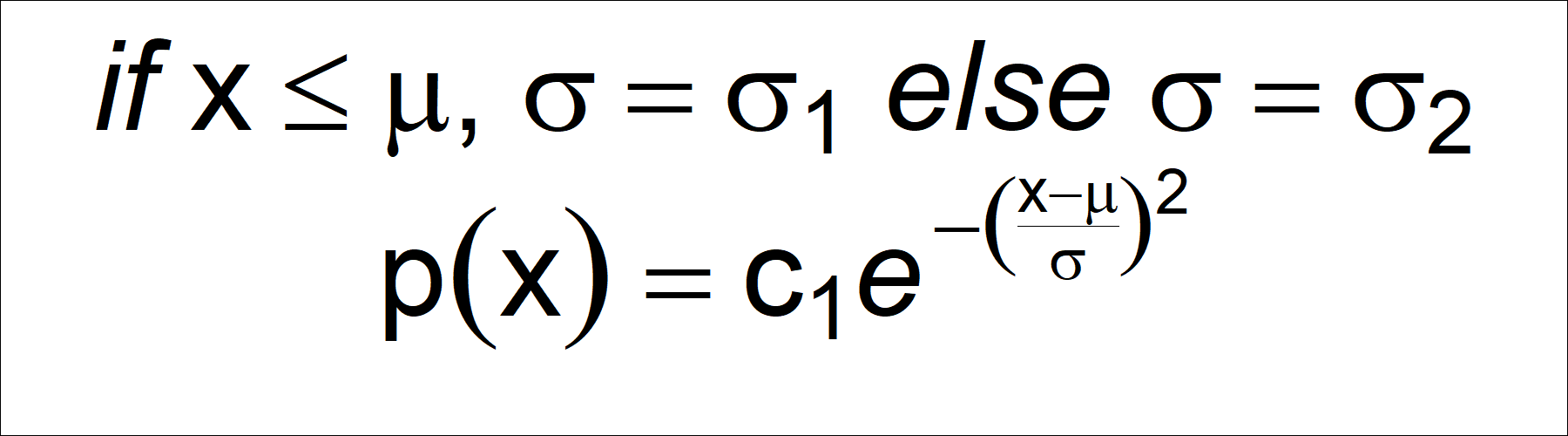
Peristeva & Kostaki 2007, 2015
models
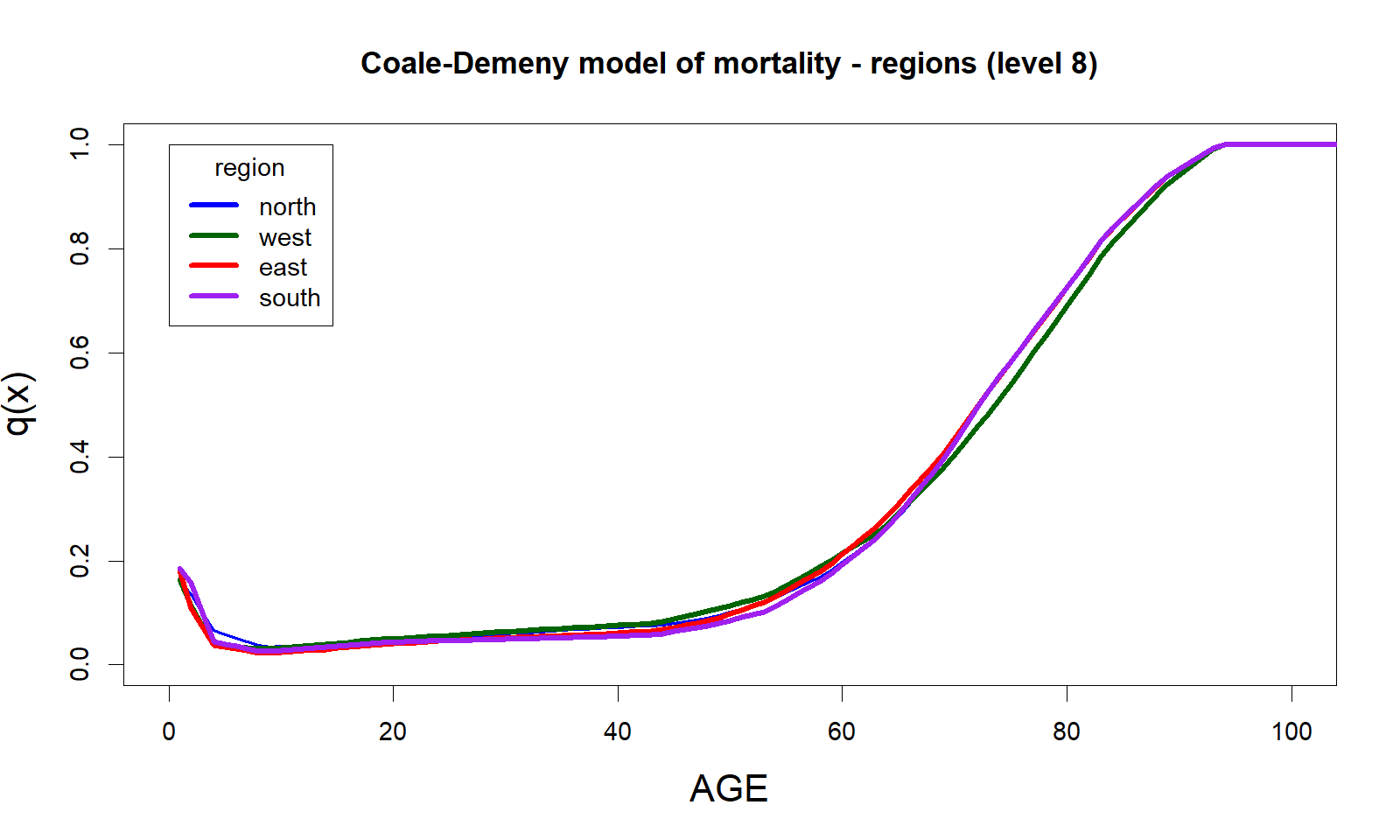
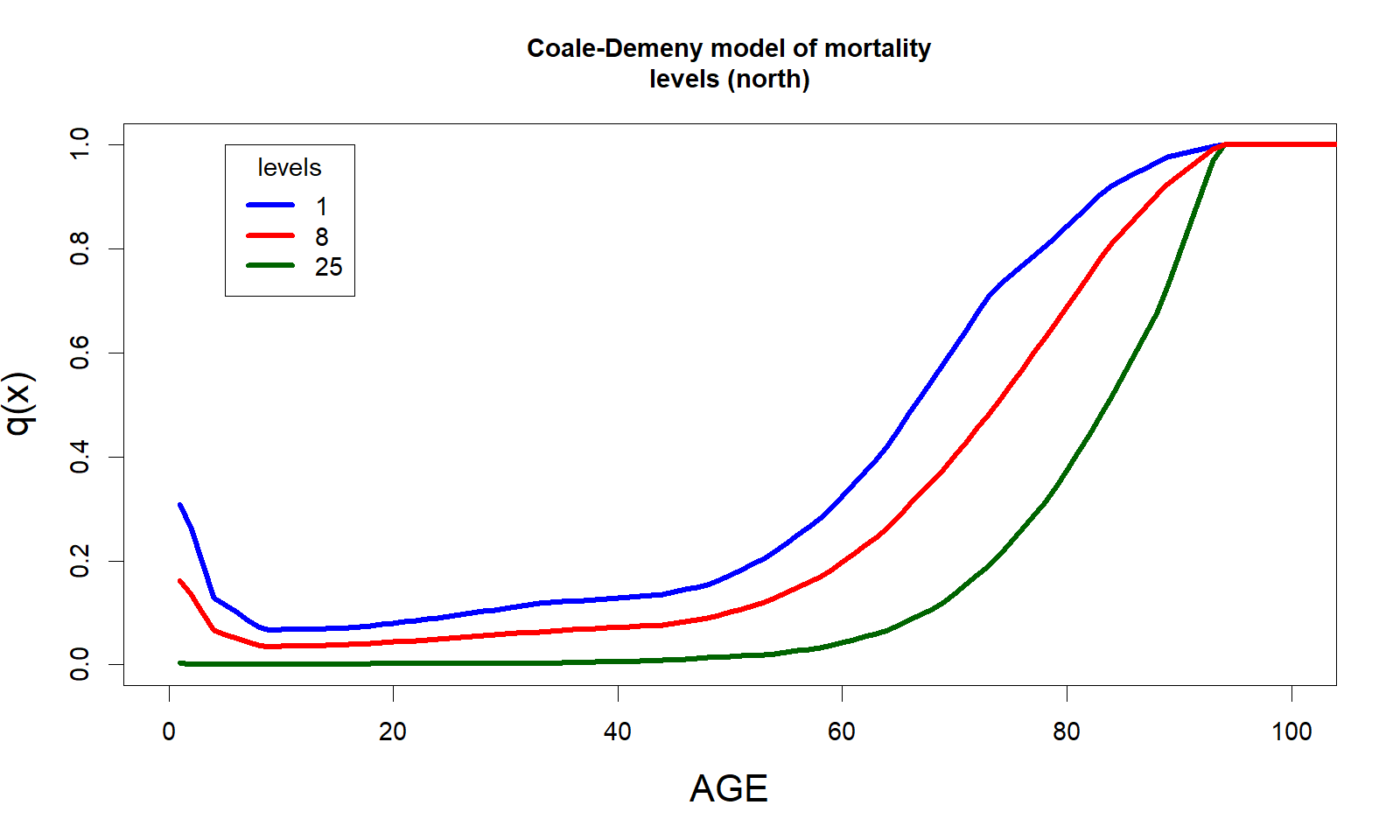
Coale-Demeny Life Tables Model ('cdmlt' functions in demogR package by James Holland Jones and collaborators)
Coale, A., P. Demeny, and B. Vaughn. 1983. Regional model life tables and stable populations. 2nd ed. New York: Academic Press.
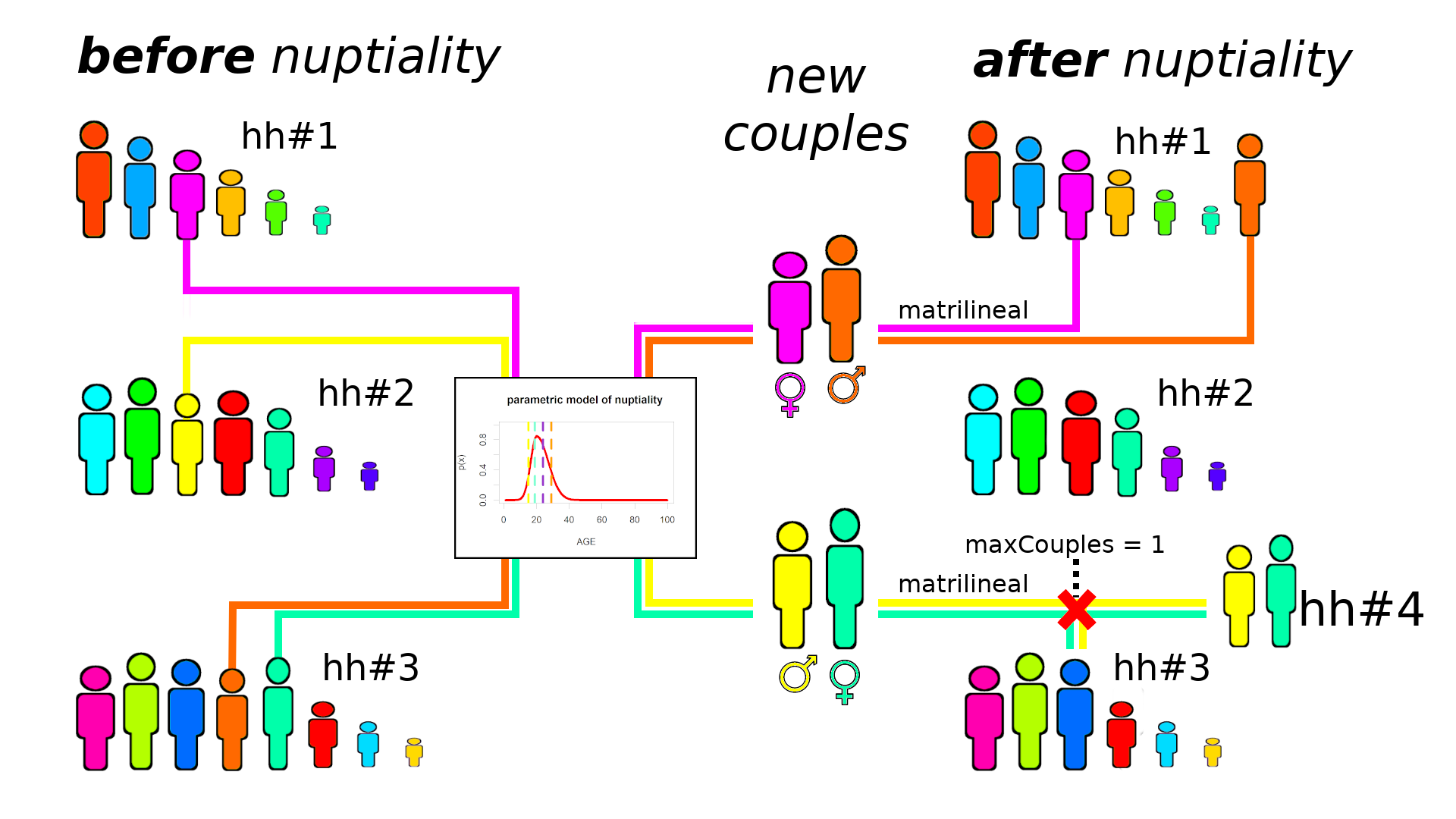
Nuptiality
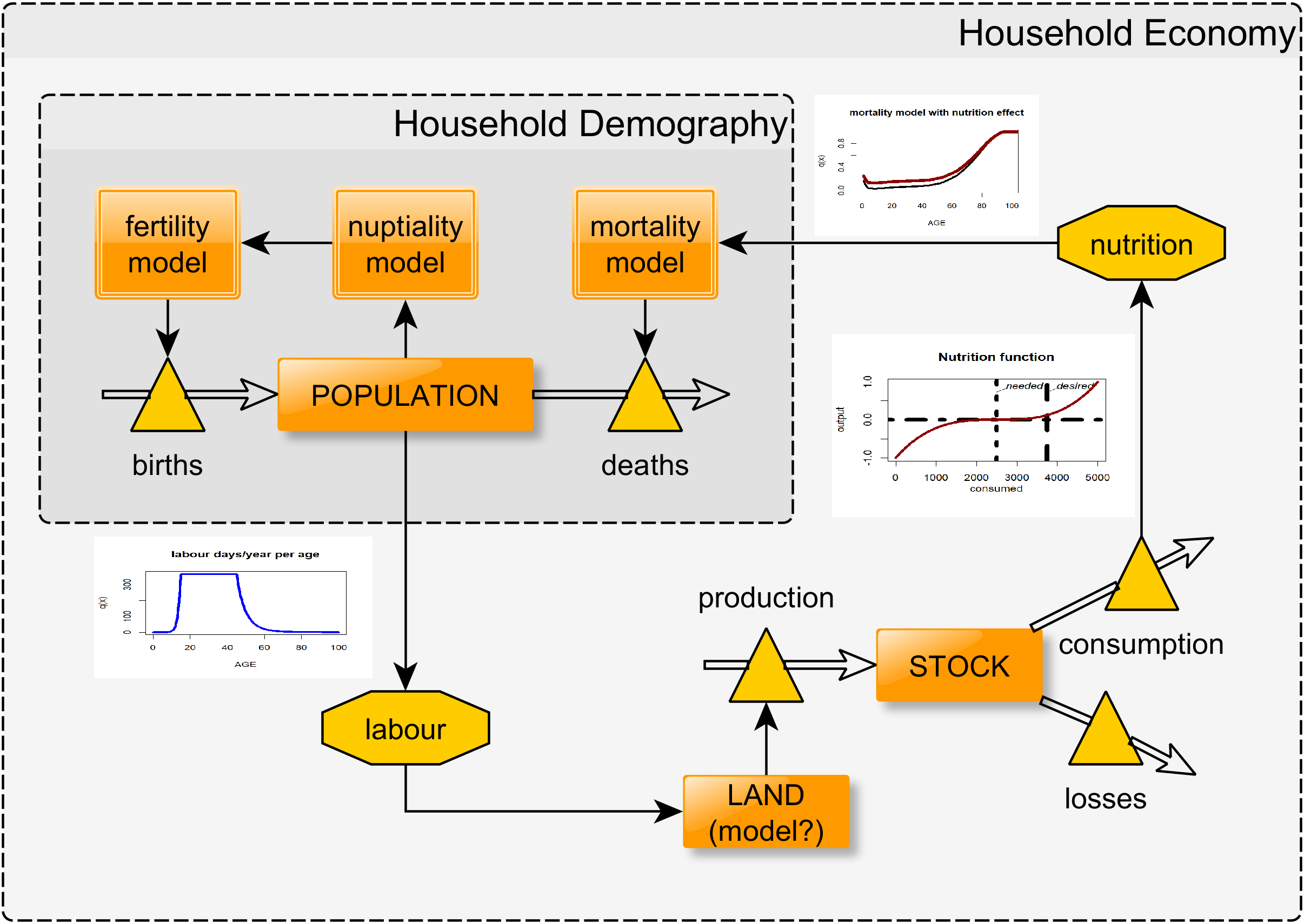
Household economy
cycle
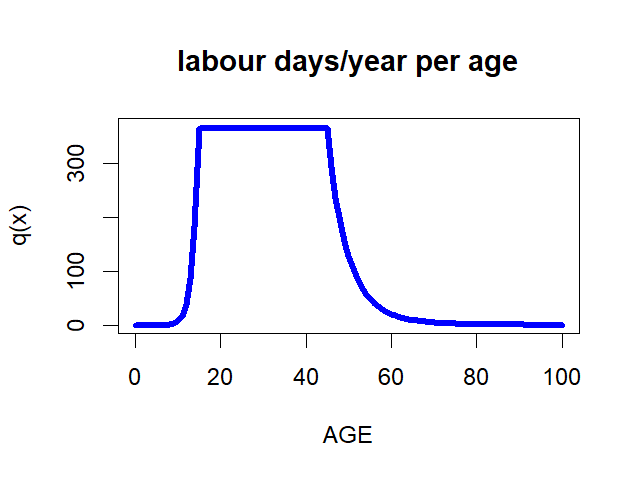
labour
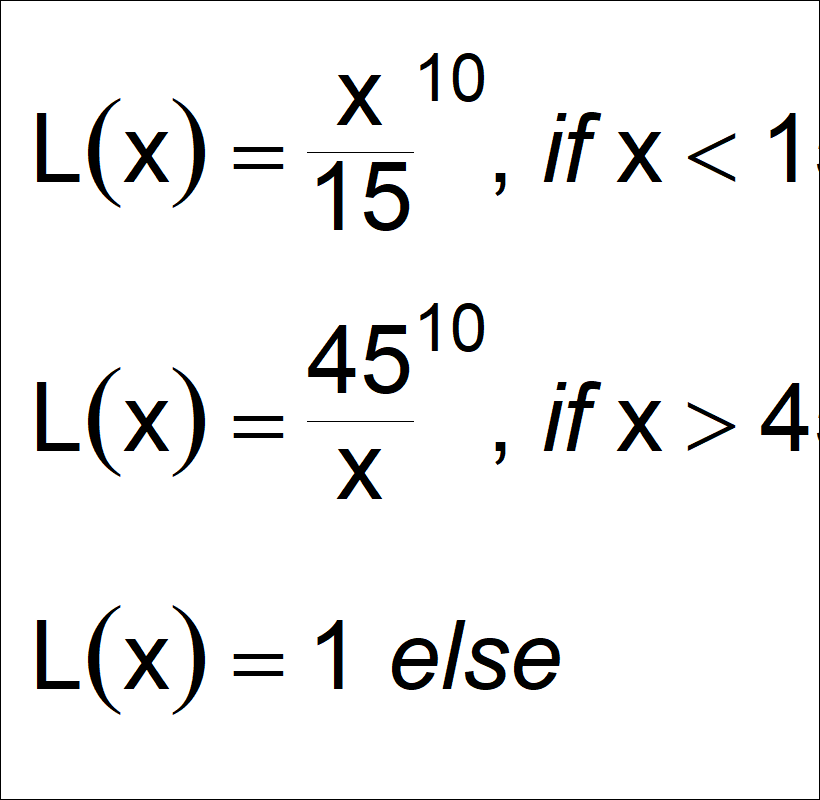
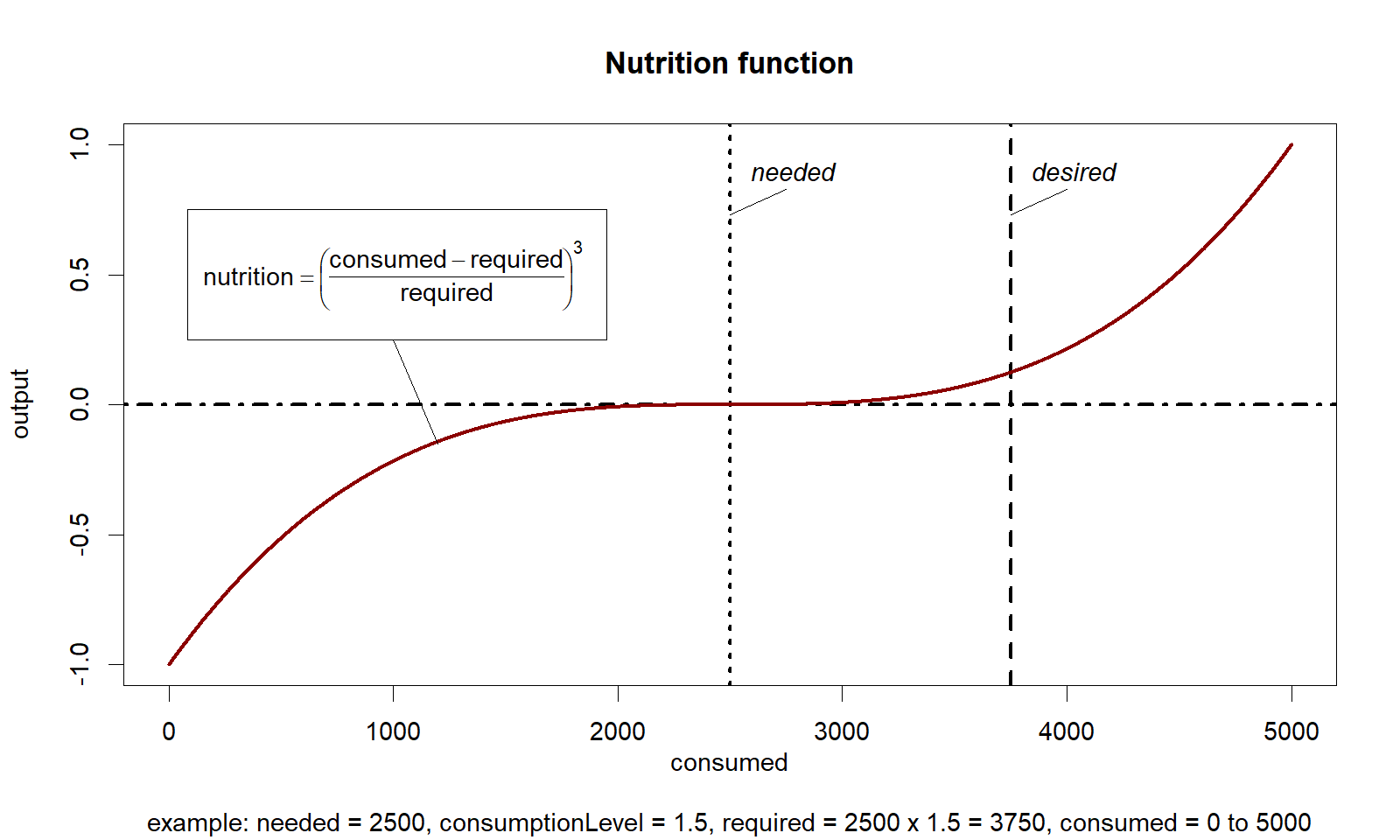
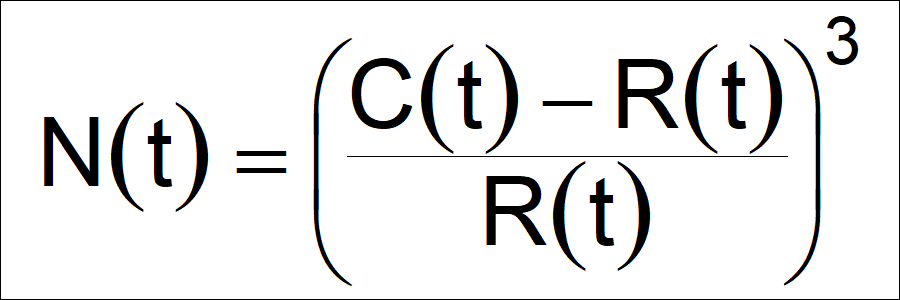
nutrition
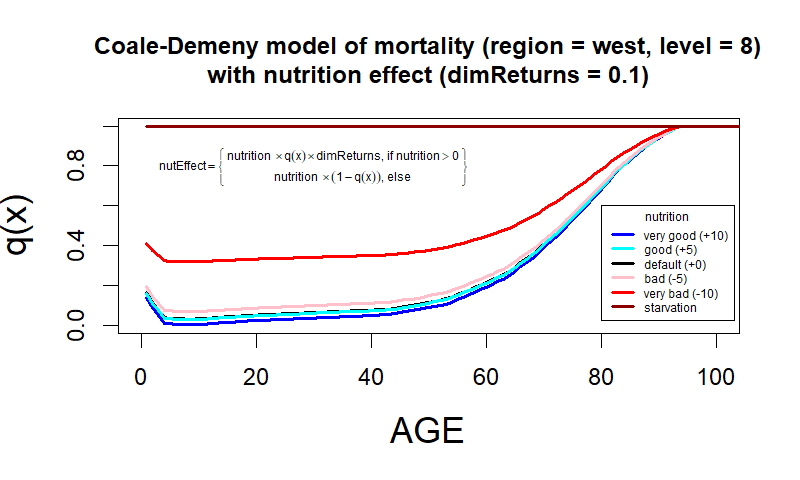
nutrition effect on mortality

Land use model and strategy (decision-making)
- land divided in cells (patches)
- cultivable/non-cultivable
- cover: crops/non-crops
- soil (humidity, salinity, N, pH)
under construction!
Exchange network dynamics
'hubs' can emerge/fluctuate/collapse even without exogenous factorsPondTrade model
'TwoRains' project
ERC, 2015-2020
Follow our updates!
Acknowledgements
Thanks to the Land, Water and Settlement and TwoRains teams:
Aftab Alam, Alessandro Ceccarelli, Sagorika Chakraborty,
Sudarshan Chakradhari, Arti Chowdhary, Yama Dixit, Charly French, Adam Green,
Henry Green, Lily Green, David Hodell, Penny Jones, Carla Lancelotti, Emma Lightfoot, Frank Lynam,
Sayantani Neogi, Hector Orengo, Arun Kumar Pandey, Danika Parikh, Vikas Pawar, Amit Ranjan,
David Redhouse, Dheerendra Pratab Singh, Akshyeta Suryanarayan, & Joanna Walker.
Special thanks also to the Department of AIHC and Archaeology, BHU, the European Research Council (ERC),
and the UK-India Education and Research Initiative (UKIERI) for support and funding, and to the Archaeological
Survey of India for permission to carry out the work.
How to ‘downsize’ a complex society
Experiments with agent-based models to assess the resilience of Indus Civilisation settlements to past climate change
Andreas Angourakis,
Jennifer Bates,
Jean-Phillipe Baudouin,
Alena Giesche,
M. Cemre Ustunkaya,
Nathan Wright,
Ravindra N. Singh and
Cameron A. Petrie
THANK YOU!
https://andros-spica.github.io/IOW-Angourakis-et-al-2019/index.html?print-pdf (printable version)