Disentangling georesourcescapes with agent-based modelling
the case of prehistoric salt mining at Dürrnberg, Austria
Andreas Angourakis
@AndrosSpica,
Nicole Boenke, Thomas Stöllner


Oberer Salzach, 1941 by Bruno Jüttner (1880-1965)
(Harzmuseum Wernigerode, K 3218)
Outline
- Question, case study and approach
- Social complexity and salt mining
- 'Artifact metabolism': a modelling framework
- Challenges
1.
Question,
case study
and approach
The entanglement of
social practices and environmental conditions
through which societies appropriate a georesource
(after Stöllner 2021)
.jpg)
Systems thinking interpretation
elements in a causal mechanism
are related in such a way that
the state of one is closely linked to
the state of many others
diffuse causality & feedback loops
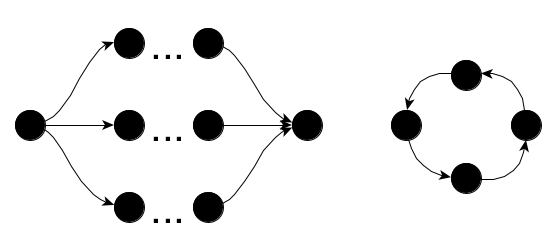
Can we identify mechanisms that explain the formation of georesourcescapes?
i.e. emergence
rock salt mining at Dürrnberg
- Well-studied archaeological site
(incl. work by Stöllner, Boenke, et al.) - Core area of a wider, far-reaching archaeological culture (Hallstatt)

(Dbachmann via Wikimedia Commons)
- Particularity and importance due to rock salt mining
- Links crafts, exchange and political complexity
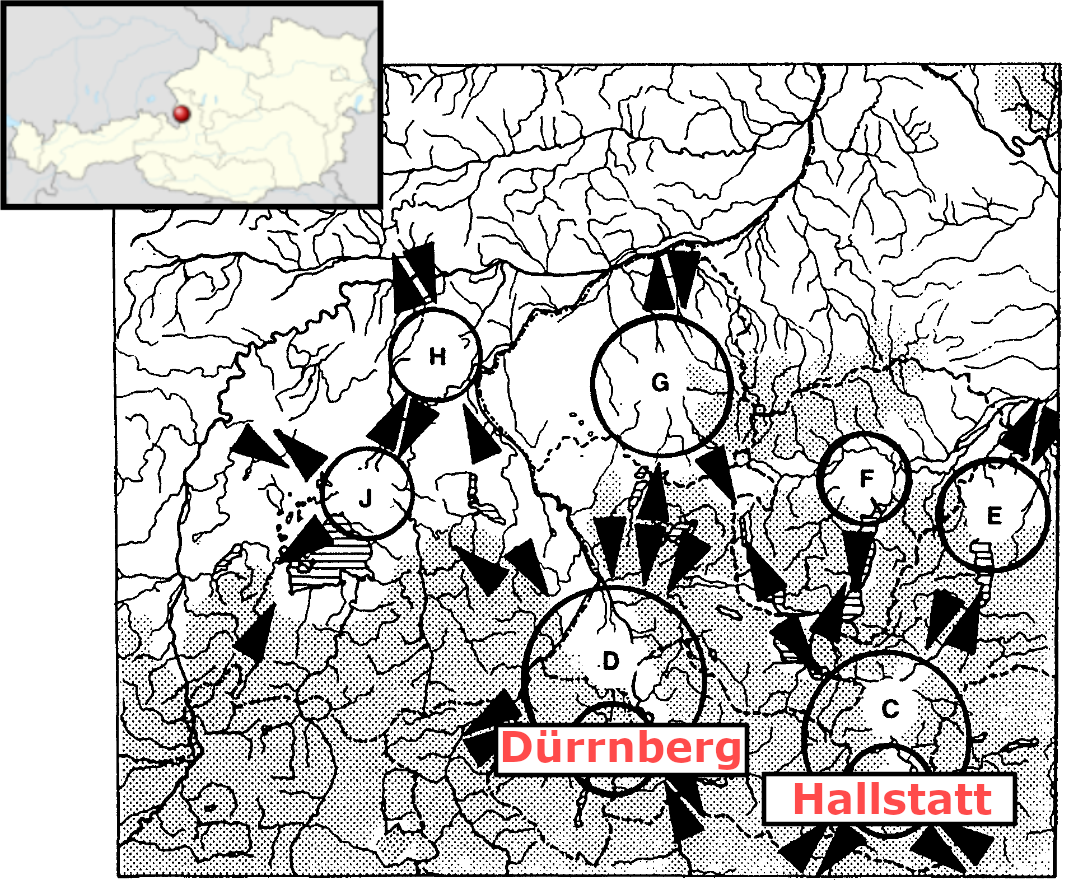
(mod. from Stöllner 2003, Fig 39)
Dürrnberg settlement change
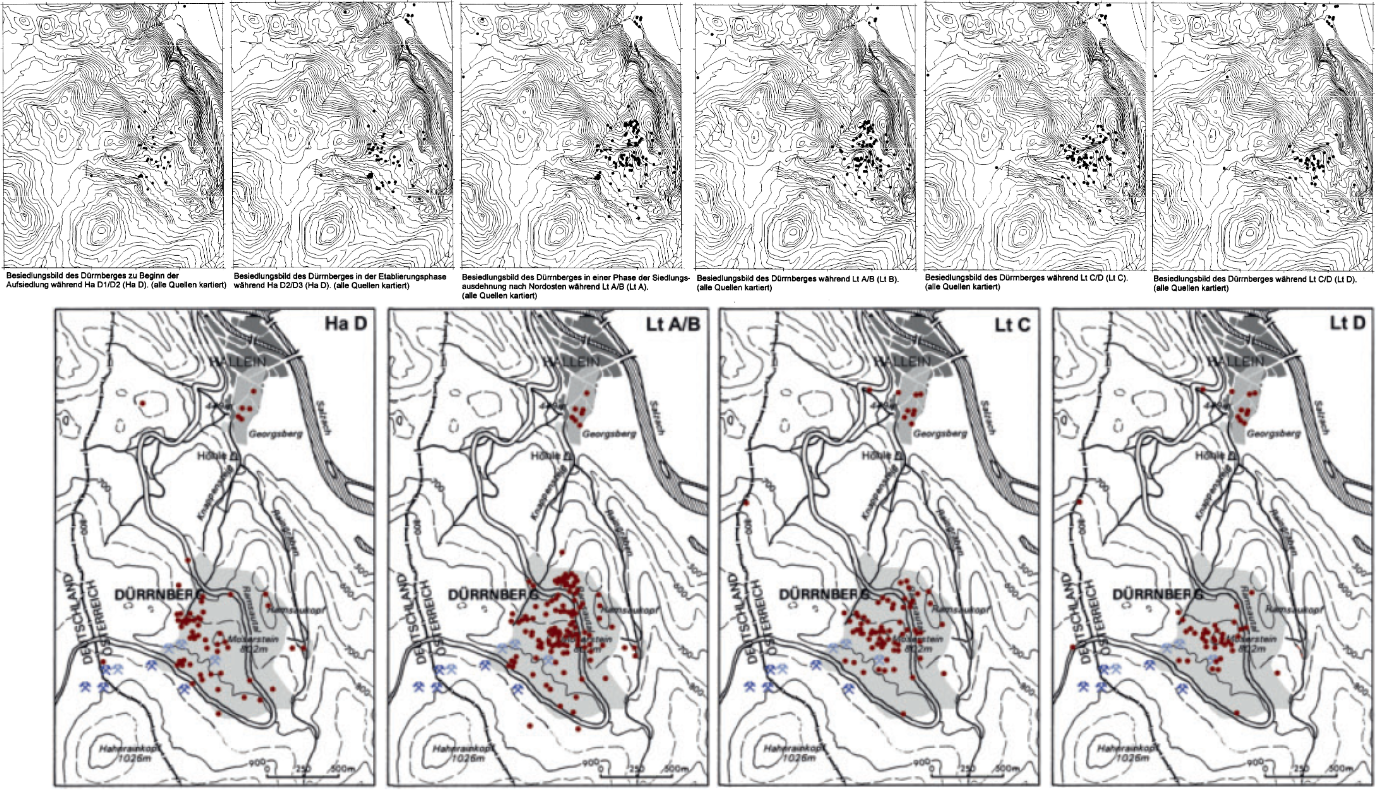
- Dual settlement:
- Mines (Bad Dürrnberg proper)
- Village (Hallein)
- Salt mining:
- Beginnings (Ha D: c.620–450)
- Intensification
(Lt A/B: c.500-250 BC) - Resilience to troubled times
in later periods
What salt mining entails
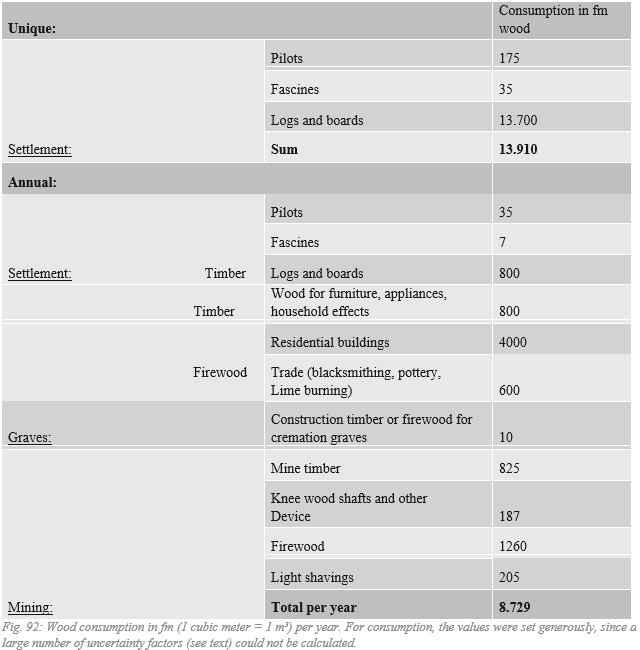
Wood and food consumption estimates (e.g. for c. 1000 to 1700 workers) indicate salt mining activity costed a substantial economic effort
Labour intensity and
poor conditions
Multiplication of activities
(crafts, specialisations)
Dependency on exchange
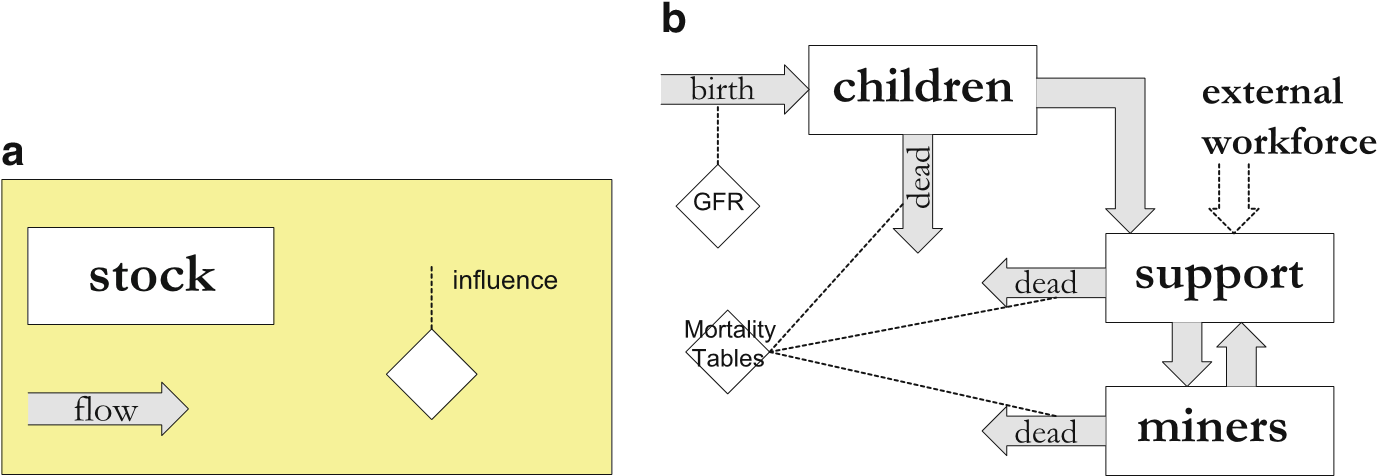
Simulation of Socio-environmental Systems
Socio-ecological System (SES)
Simulation
Agent-based modelling

(Sreejiagriman via Wikimedia Commons)
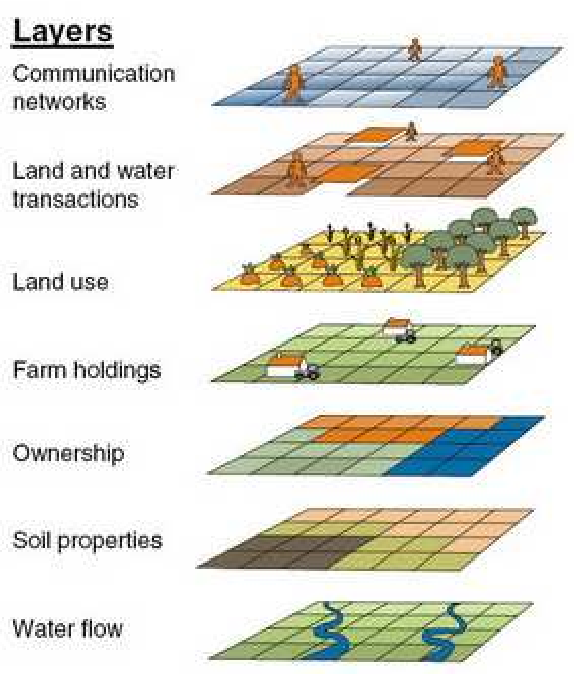
(Kremmydas 2012, Fig. 5)
Many examples in archaeology
e.g., Doran et al. 1994, Wilkinson et al. 2013,
Lake 2014, Madella et al. 2014,
Wurzer et al. 2015,
Romanwska et al. 2019, 2021
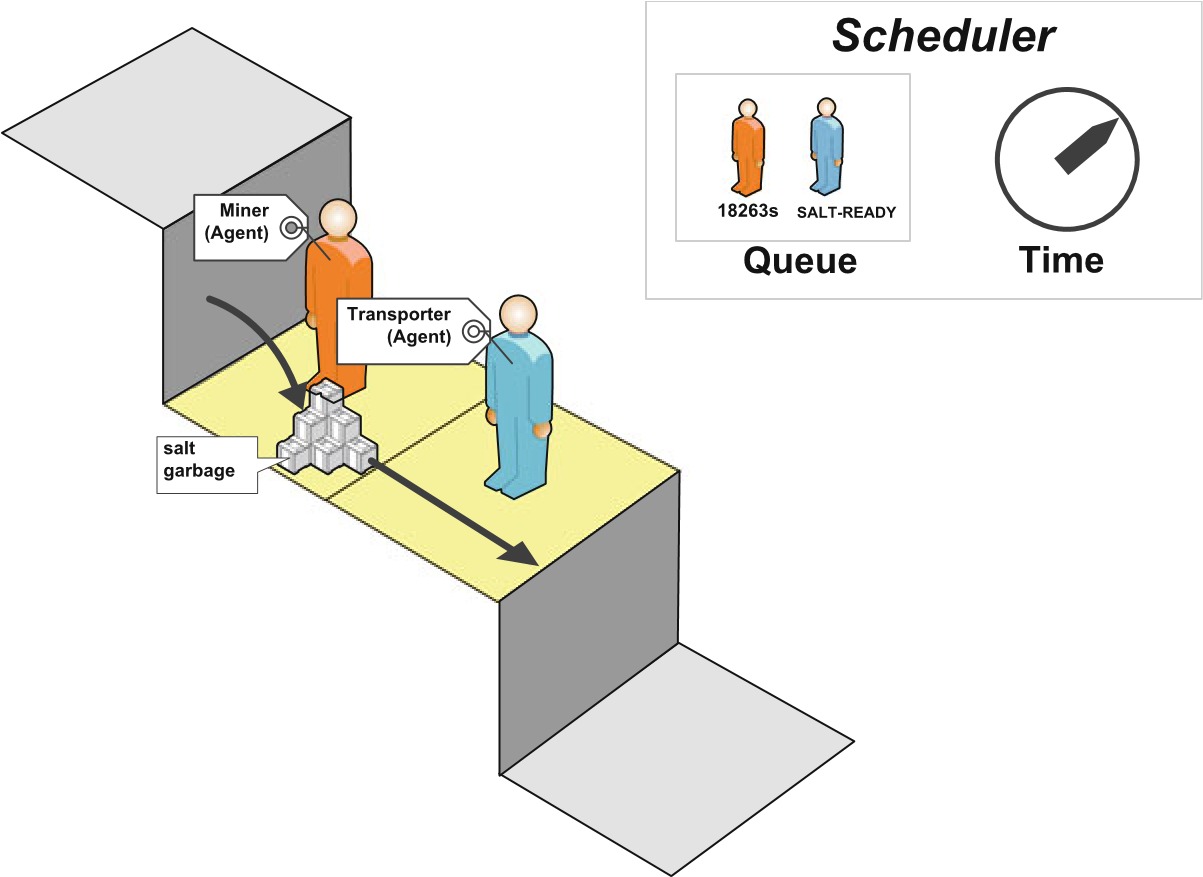
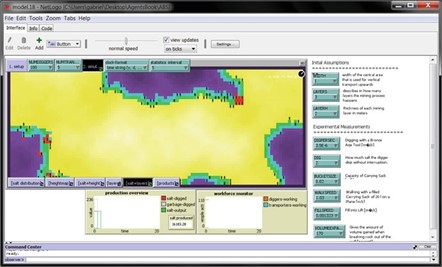
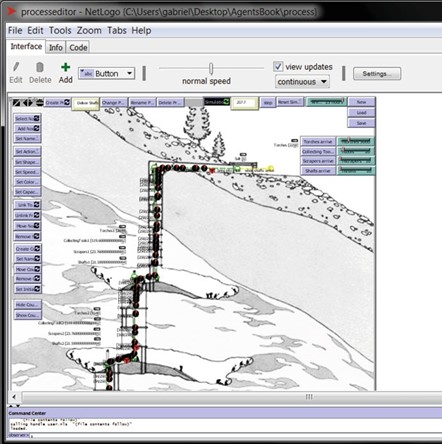
Work done by K. Kowarik, G. Wurzer,
H. Reschreiter et alle
(Kowarik et al. 2015, 2012, 2010)
"Business process simulation" (G. Wurzer)
Progressive modelling
- Increasing complexity starting at the mine shaft up to the regional scale.
- Multiple models and experiments
- Interesting results on:
- Mining logistics (gallery formation, labour requiremnts and organisation)
- General demographic dynamics at local scale
(hybrid ABM-SD model)
- Apparently truncated workplan
2.
Social complexity
and salt mining
(sensu Sahlings, Polanyi)
Domestic Mode of Production
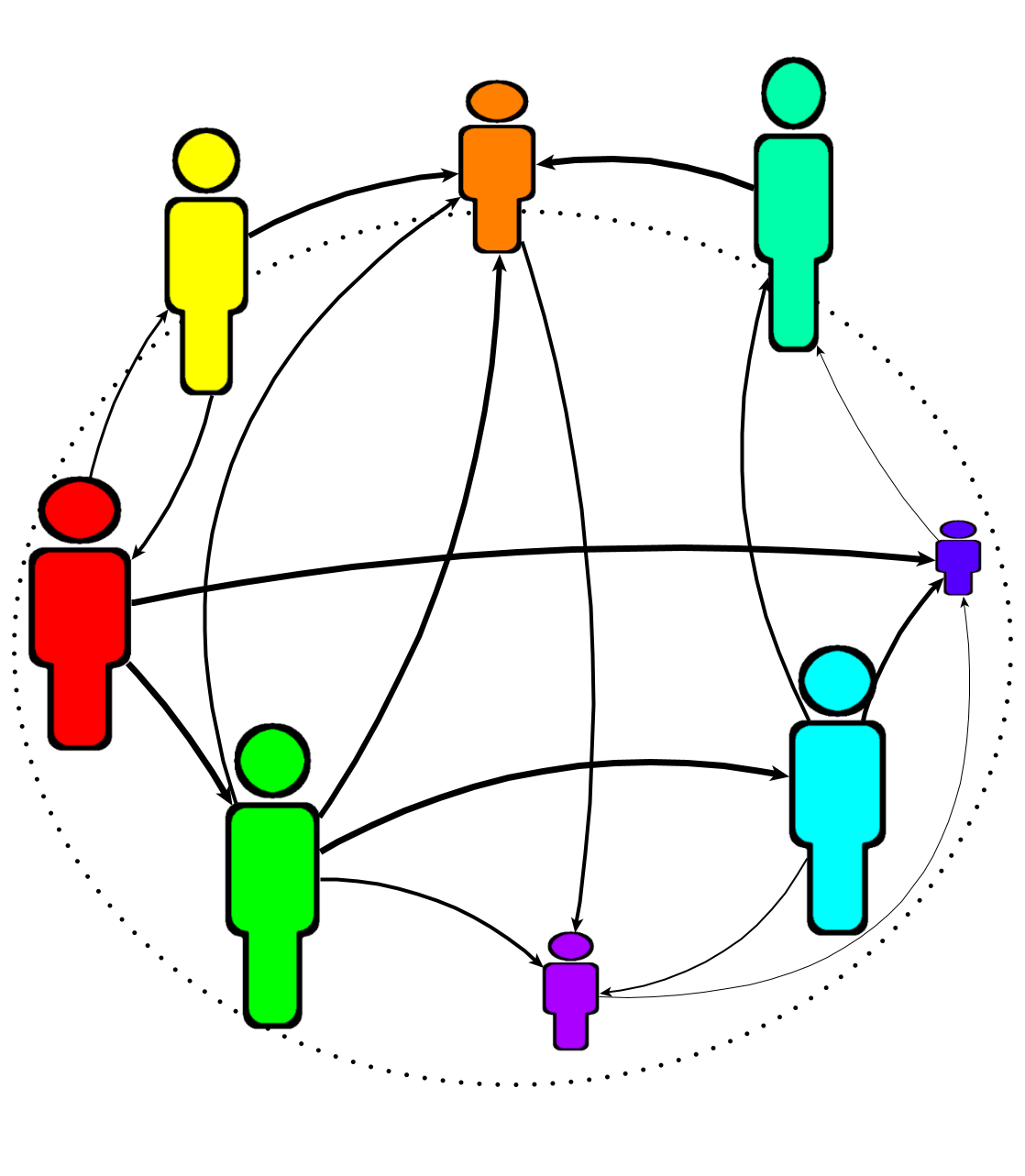
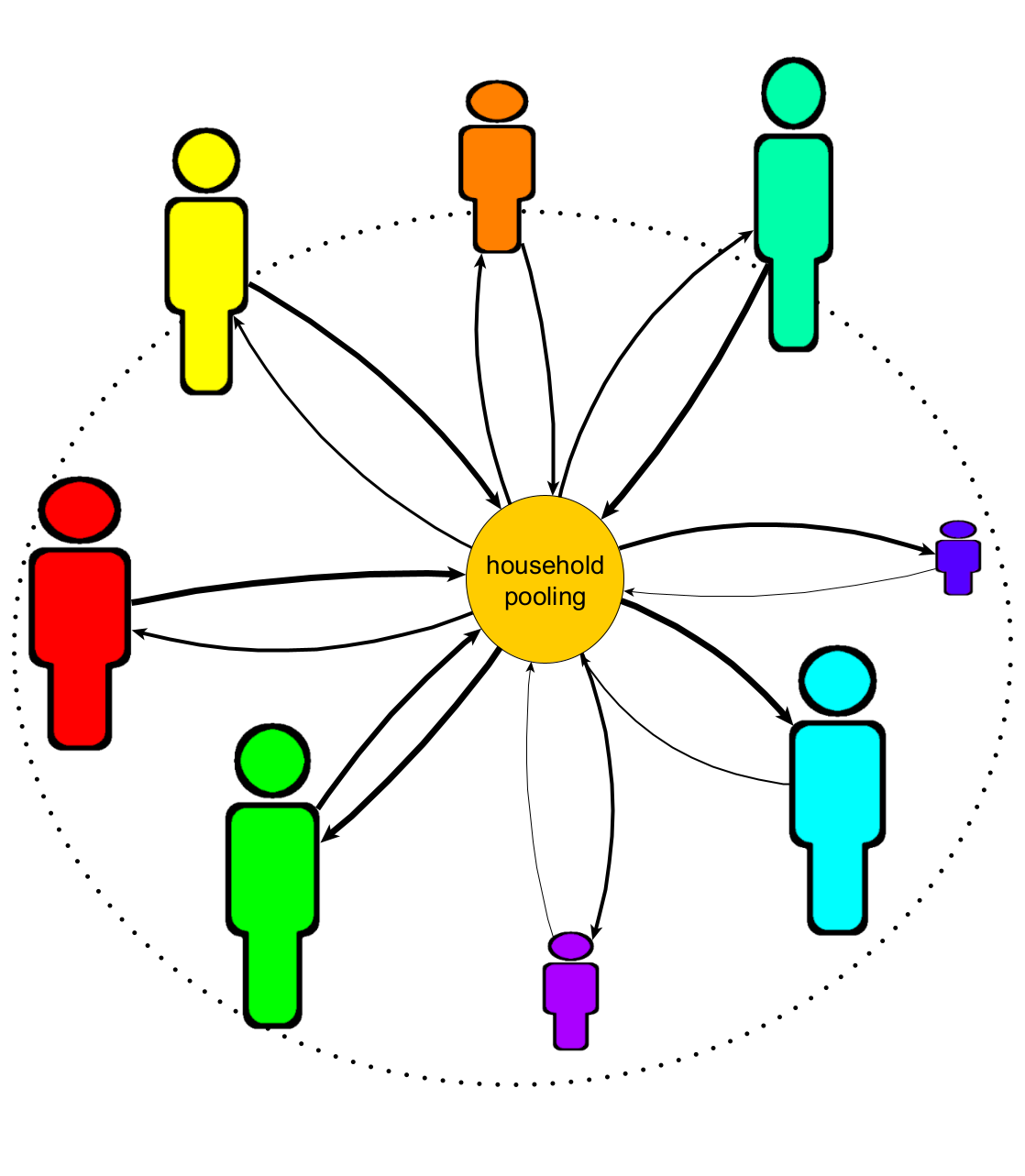
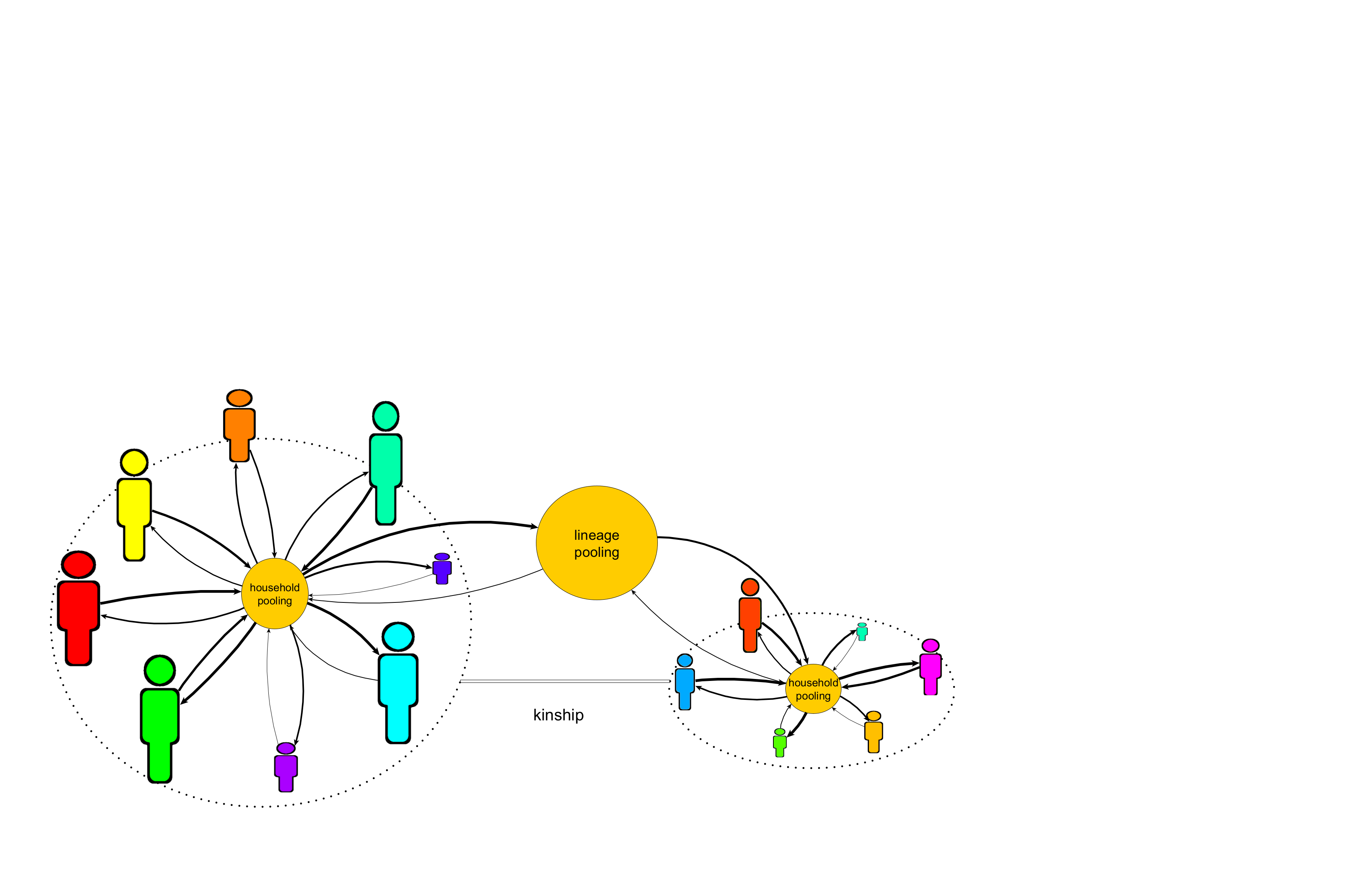
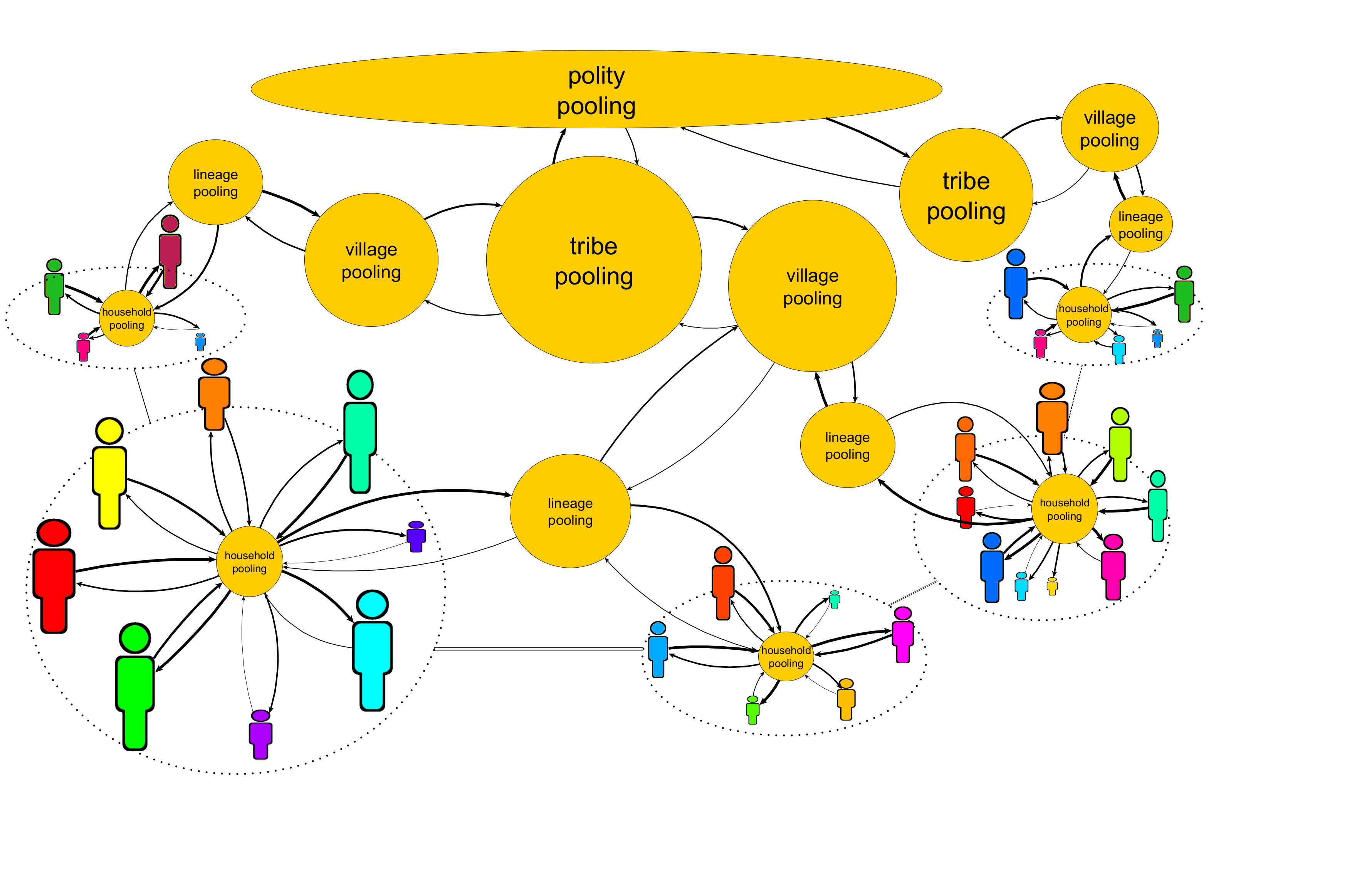
- Pooling of labour/resources for production/consumption
- Production for use value:
limited necessities, limited production effort, aggregate underproduction - Cohesive decision-making
- Household autonomy → interhousehold anarchy
- Full independence and self-sufficiency state (only theoretical)
Sahlins 1972. Stone Age Economics
Exchange
- Strong rule of kinship
- Generalised, balanced and negative reciprocity
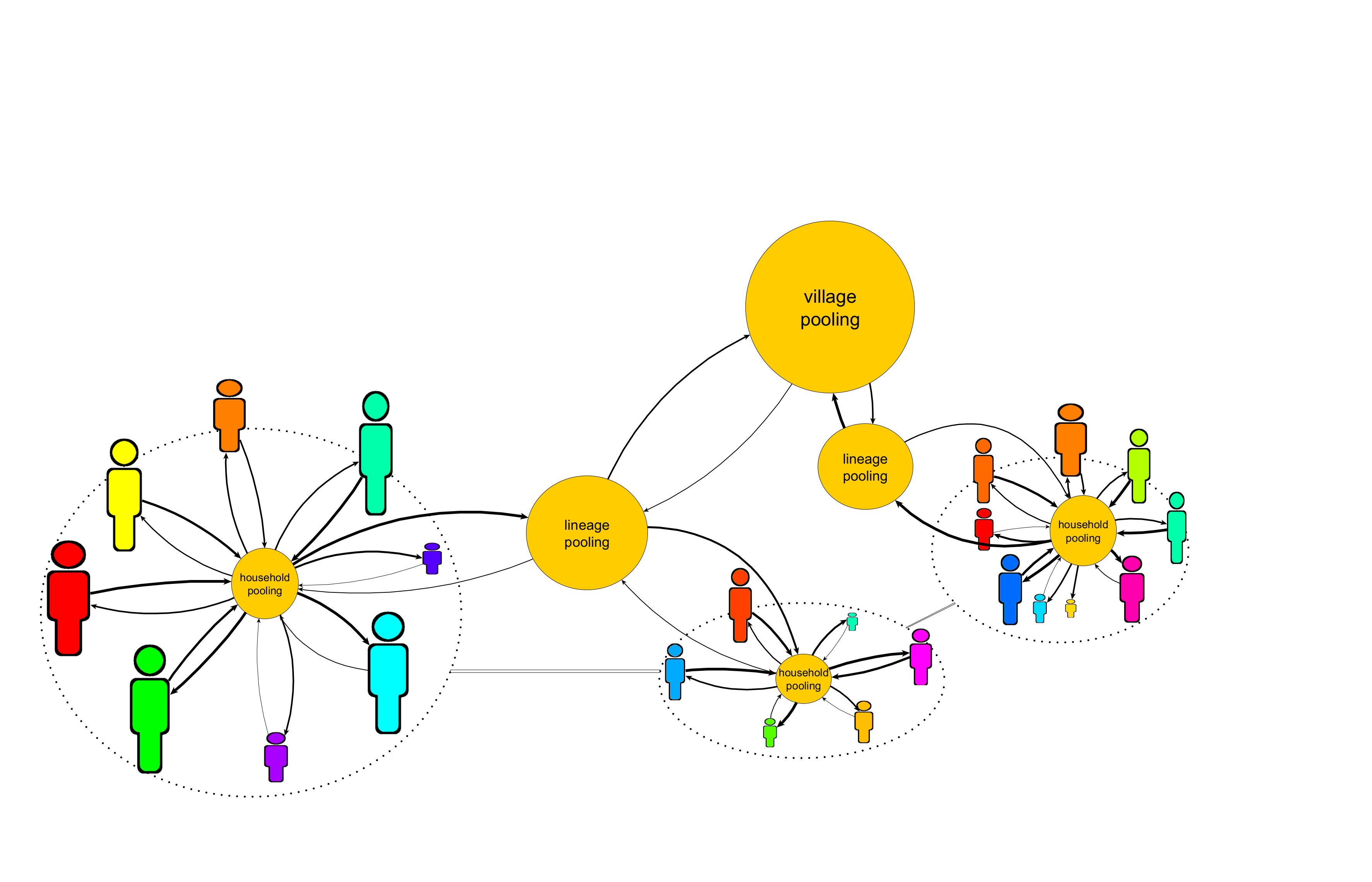
- Most regular exchanges entail pooling
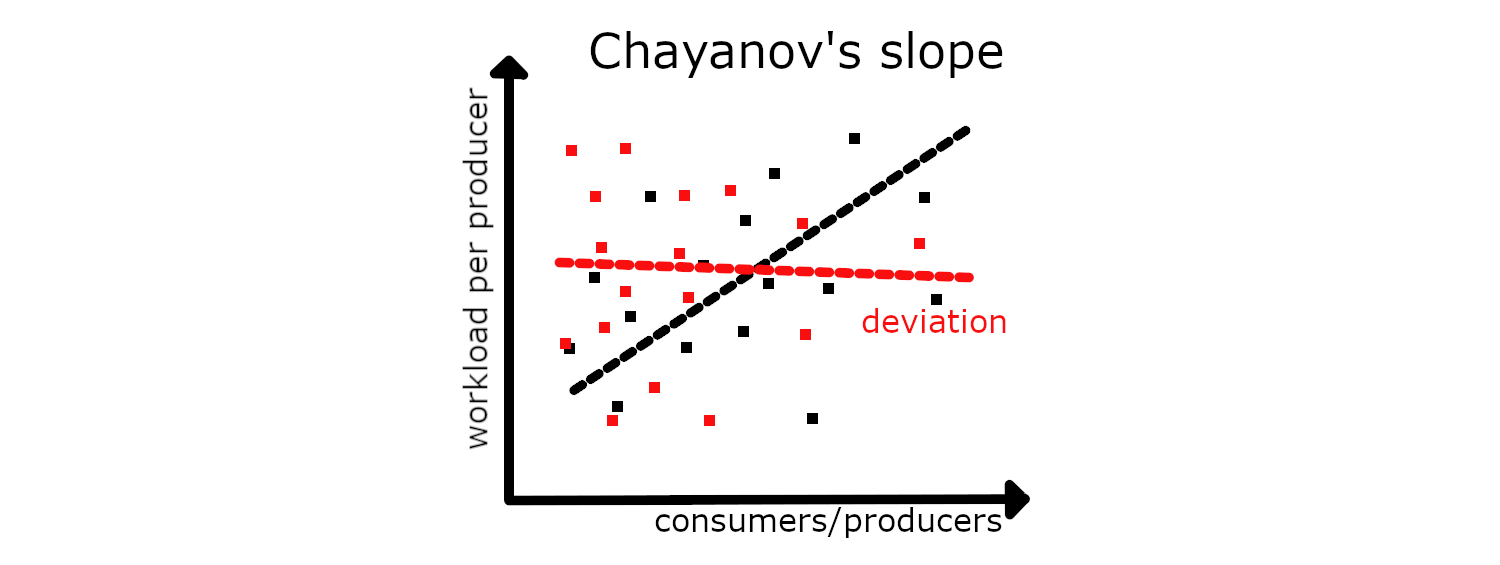
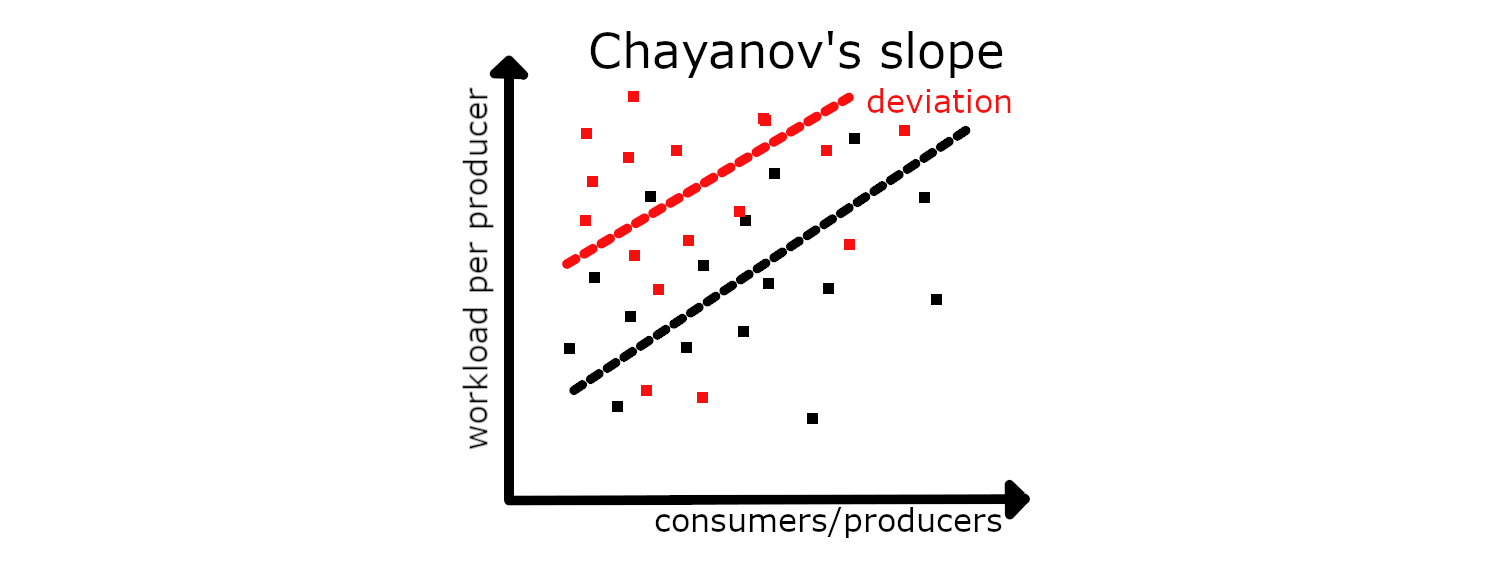
- Tensions between production for use and production for exchange
(self-interest vs. moral obligations to kin) - Increasing production for exchange
(overproduction from household perspective)
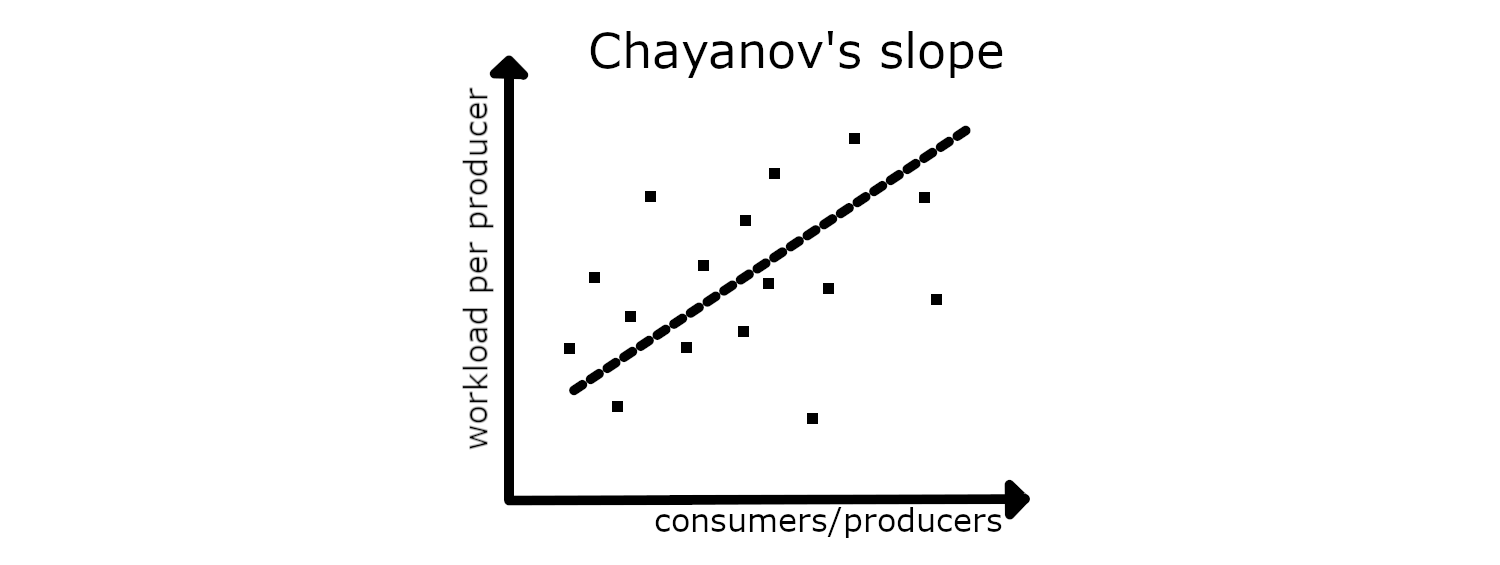
→ deviation from Chayanov's slope - Social complexity both as requirer and enabler of intensification
Sahlins 1972. Stone Age Economics
Leadership
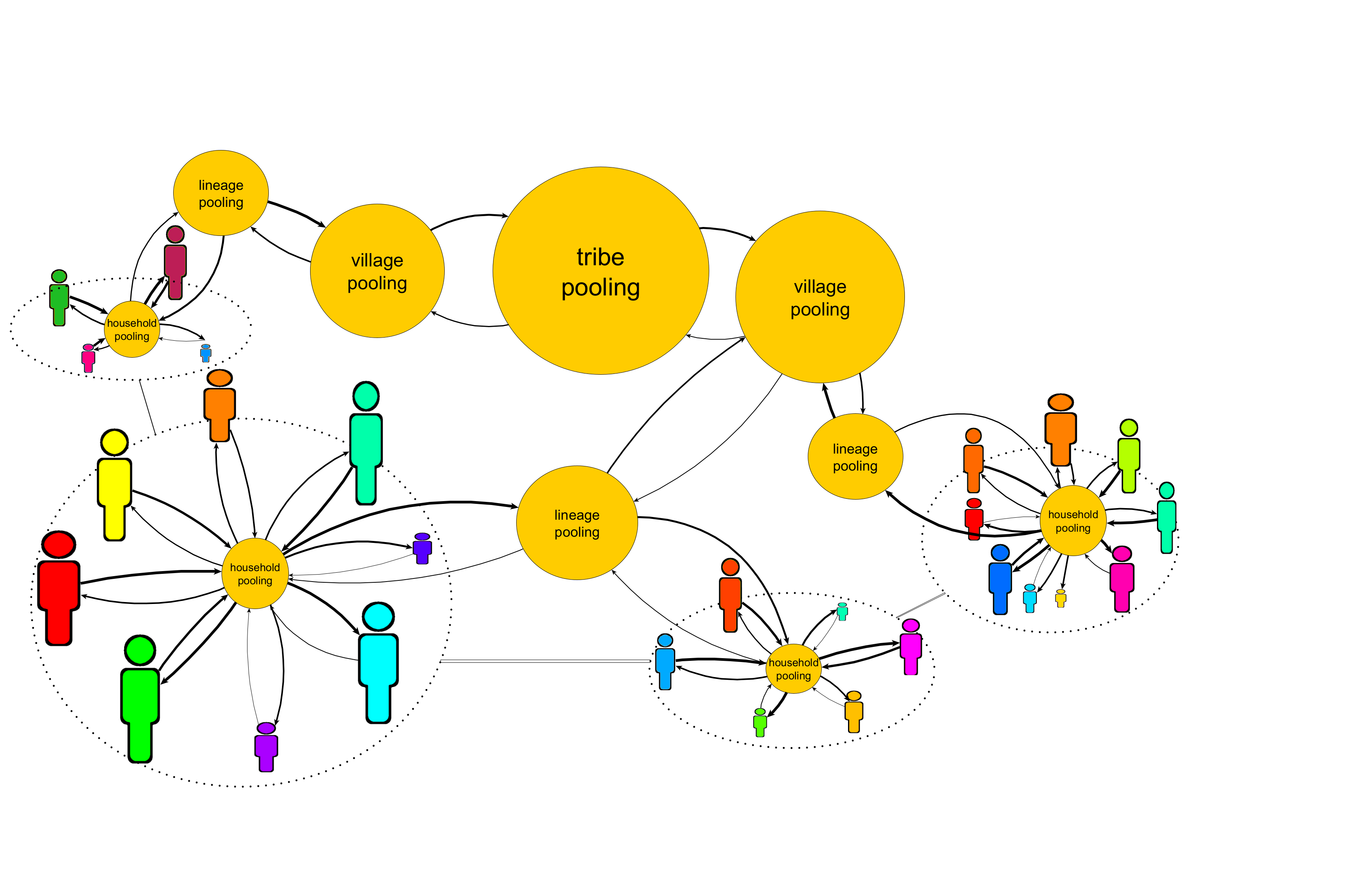
- Pooling challenges increase with scale
- Leaders drive pooling and domestic overproduction
(as decision-makers, negotiators) - Households handling (recurrently) extra costs of exchanges
- Coercion and power replace kinship
- Inequality disrupts exchange balance
- Negative reciprocity weakens leadership
- More pooling boosts leader power
- Leadership needed for "production for exchange" economy?
3.
'Artifact metabolism':
a modelling framework
modelling target
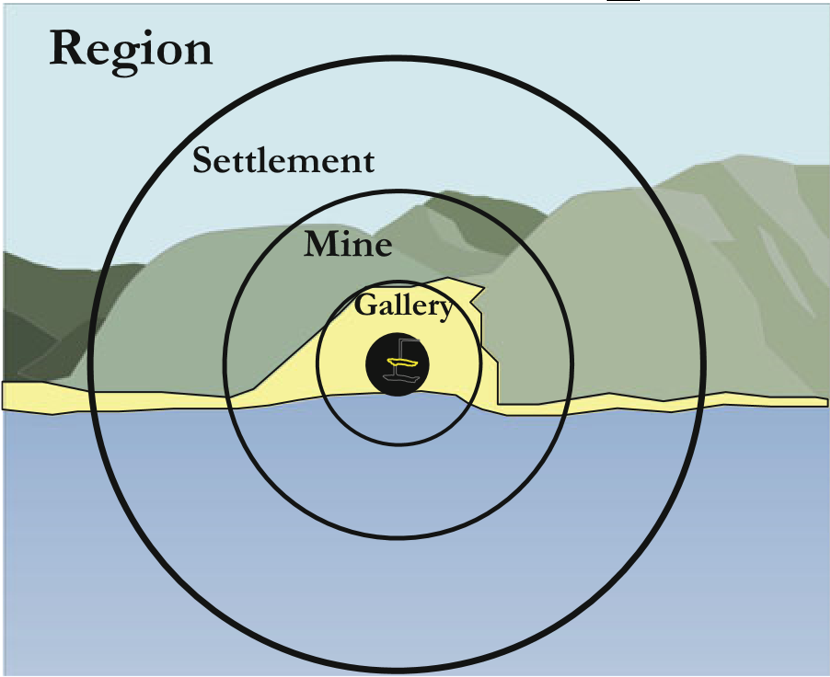
Shifting focus from gallery/mine
to settlement and region
Reproducing a sustainable rock salt economy
under the conditions at Dürrnberg
and
identify scenarios and factors of formation/intensification/obliteration
Intensive re-use of modules to encompass all relevant domains:
- food economy
- demography
- social structure
- multiple crafts
- local and regional exchange
From present and future work on the Indus Village model (Angourakis et al. 2020, 2021, 2022), NASSA library, and other sources
The metabolism analogy

The "complicated" should eventually be just "complex"
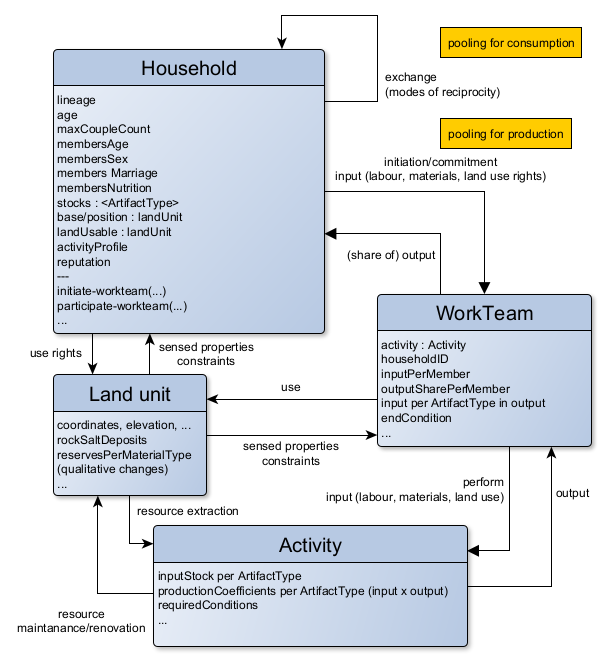
Entities
- Households
- Work teams
- Land unit
Activities
- Iterative process of a work team
- Input: labour, artifacts and land (incl. resources)
- Output: artifacts, well being, events, ...
- Requirements (qualitative, quantitative)
Artifacts
- A broad spectrum of types with different properties (e.g., movable, container, etc)
- Intrinsically linked to the activities making them
- Used in activities (production) and direct consumption
Activity class
Dummy example in Python
(print in terminal)
activity setup
Activity output: axe
Input types: dict_keys(['wood', 'stone'])
Production functions: min(labor, land, wood, stone)
Max. productivity per input artifact per type: {'wood': 25, 'stone': 100}
Max. productivity per labor: 3
Max. productivity per land: 10
activity performance
Activity output: axe
Input: labor=10, land=20, artifacts={'wood': 100, 'stone': 50}
Output: axe=30
{'wood': 98.80000000000001, 'stone': 49.7, 'axe': 30}
{
"name": "axe",
"step_amount": 1,
"max_productivity_per_labor": 3,
"max_productivity_per_land": 10,
"max_productivity_per_input_artifact_per_type": {
"wood": 25,
"stone": 100
},
"production_function": "min(labor, land, wood, stone)"
}
Activity profile
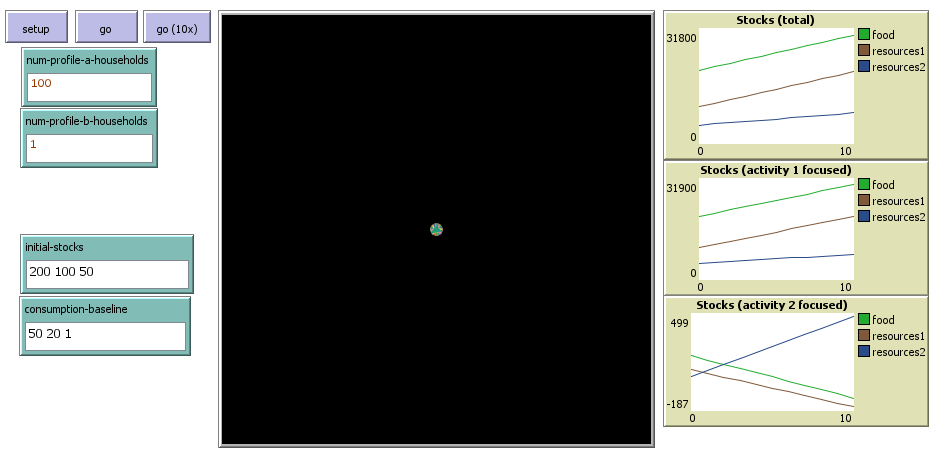
Dummy example in NetLogo
Activities performed a number of times within a cycle (e.g. hours per day or week) according to a predefined sequence of activity IDs (activity profiles).
A "farming" household could have an activity profile where a `farming` activity occupies 2/3 of their working time-person slots.
Artifact class
Dummy example in Python
Hierarchy of artifact subclasses and inheritance of properties:
e.g., artifact > movable > Container,
of ContainerType "VESSEL",
of MineralMaterialType "CERAMIC", etc
Types as extensive, yet finite, collections
Pathways of production defined by creation, transformation or destruction of artifacts
class AnimalMaterialType(Enum):
# animal-based
MAMMAL_BONE = 1
FISH_BONE = 2
HORN_ANTLER = 3
PELT = 4
HIDE = 5
LEATHER = 6
SINEW = 7
SHELL = 8
TALLOW = 9 # animal fat
BEESWAX = 10
...
challenges
- Greater distance between archaeological evidence and social explanation
- Reliance on:
- indirect written sources (Greeks, Romans)
- and parallels (archaeological, ethnographic, ethnohistoric)
-
Modelling for the long-haul
(good representation delays validation)
for your attention!
Oberer Salzach, 1941 by Bruno Jüttner (1880-1965)
(Harzmuseum Wernigerode, K 3218)